Liquid Biopsy Detects Lung Cancer Recurrence Signals Months Before Imaging
Posted on 21 Oct 2026
Non-small cell lung cancer (NSCLC) is the most common type of lung cancer and remains a major cause of cancer-related death. Early-stage tumors are often treated surgically, but recurrence can still occur after surgery or initial therapy. Imaging remains the standard for follow-up, although microscopic disease may not yet be visible on scans. New findings now show that liquid biopsy can detect residual lung cancer signals in blood before radiologic recurrence becomes apparent.
Researchers at NYU Langone Health, NYU Grossman School of Medicine, and the Laura and Isaac Perlmutter Cancer Center evaluated a whole-genome sequencing liquid biopsy approach for monitoring lung cancer recurrence. The test analyzes circulating tumor DNA shed by tumor cells into the bloodstream and tracks tumor-specific whole-genome mutational signatures across serial blood draws. This allows researchers to assess minimal residual disease at different stages of treatment.
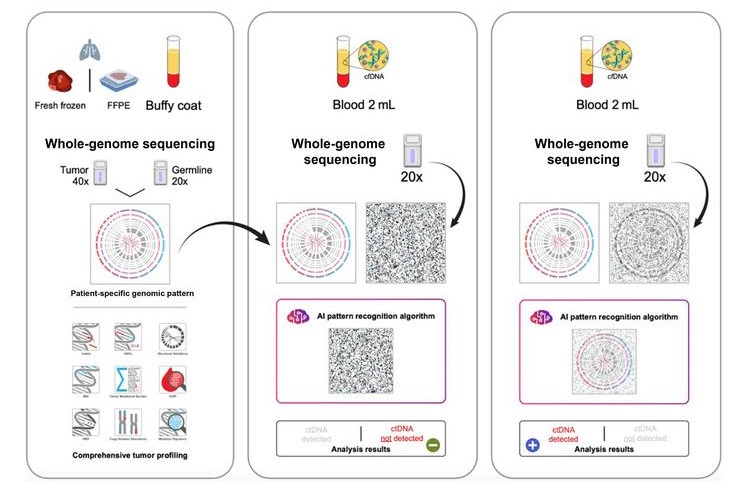
The study focused on predicting recurrence of stage IA lung adenocarcinoma using circulating tumor cell–free DNA whole-genome mutational signatures. It found that a positive tumor DNA result served as a highly sensitive biomarker of minimal residual disease, detecting microscopic recurrence months before scans showed physical tumors. A negative result strongly correlated with sustained remission. The article appears online ahead of volume 28, issue 11, November 2026, of The Journal of Molecular Diagnostics, published by Elsevier.
The findings described potential implications across the patient pathway. The blood test results could help identify patients at higher or lower risk earlier, guide targeted treatment for detectable residual disease, and potentially spare patients with clear results from unnecessary overtreatment and toxicity. The study also described the value of earlier relapse detection when disease burden is extremely low.
“As a surgeon, I follow my patients very closely, and I want to know as soon as possible if the cancer has come back. Unfortunately, even the earliest stage patients risk recurrence. Our study’s findings highlight just how sensitive and specific liquid biopsy can be when integrated into routine post-treatment monitoring, even in the earliest stages of lung cancer. This is of critical importance for deciding on post-operative treatments,” said Harvey I. Pass, MD, Department of Cardiothoracic Surgery, NYU Langone Health, New York, NY.
Related Links
Grossman School of Medicine
Perlmutter Cancer Center