
We use cookies to understand how you use our site and to improve your experience. This includes personalizing content and advertising. To learn more, click here. By continuing to use our site, you accept our use of cookies. Cookie Policy.

LabMedica

Download Mobile App
Recent News Expo Clinical Chem. Molecular Diagnostics Hematology Immunology Microbiology Pathology Technology Industry Focus

Lung Tumor RNA Variants Offer Clues to Immunotherapy Benefit

By LabMedica International staff writers
Posted on 27 Oct 2026

Most patients with lung cancer do not respond to immunotherapy, creating a need for better markers of treatment response. Tumors may evade immune-based treatment through mechanisms that are not captured by standard mutation-focused analyses. New findings demonstrate that RNA splicing changes in lung tumors may help explain differences in immunotherapy response.

The Jackson Laboratory (Bar Harbor, Maine) led research identifying altered STAT2 RNA splicing as a mechanism associated with lung tumor response to immunotherapy. The study found that tumors can disable STAT2 without mutations by changing how RNA instructions are processed. Using long-read RNA sequencing, the team discovered thousands of previously unrecognized RNA variants in lung tumors.


Image: New research shows that human lung cancers use a process called alternative RNA splicing to produce different versions (isoforms) of the immune-alarm gene STAT2, shown here as ribbons. Isoforms of STAT2 are associated with how well lung cancer patients respond to immunotherapy: an isoform that retains an extra segment called an intron (top ribbon) is found in patients who respond to anti-PD-L1, while an isoform without it (bottom ribbon) is found in nonresponders. These splicing signatures could one day help doctors predict, before treatment begins, which patients are most likely to benefit from immunotherapy. (Photo courtesy of The Jackson Laboratory)

The work focused on alternative RNA splicing, a process that produces different RNA isoforms from the same gene. In STAT2, an isoform retaining an extra segment called an intron was found in patients who responded to anti-programmed death ligand 1 (anti-PD-L1) therapy. An isoform lacking that intron was found in nonresponders, suggesting that these splicing signatures may help identify patients more likely to benefit before treatment begins.

The researchers analyzed two large clinical trials of the immunotherapy drug atezolizumab. Specific STAT2 RNA splicing patterns were associated with longer survival after immunotherapy. The article notes that most reference databases used in cancer research and testing do not include these newly discovered splicing patterns.

The study was published in Science on October 22, 2026 under the title “Intron retention regulates STAT2 function and associates with immunotherapy response in lung cancer.” Institutions named in the article include The Jackson Laboratory for Genomic Medicine, the NCI-designated Jackson Laboratory Cancer Center, and UConn Health. The researchers have filed a provisional patent application covering correction of the splicing mistake with RNA-based drugs and prediction of immunotherapy response.

Related Links
The Jackson Laboratory


Platinum Member
Automated Coagulation Analyzer
Hemolumi H6
βeta-Hydroxybutyrate Reagent
β-Hydroxybutyrate LiquiColor®
MR-proADM Test
B•R•A•H•M•S MR-proADM KRYPTOR test
Gold Member
Aspiration System
VACUSAFE

Latest BioResearch News

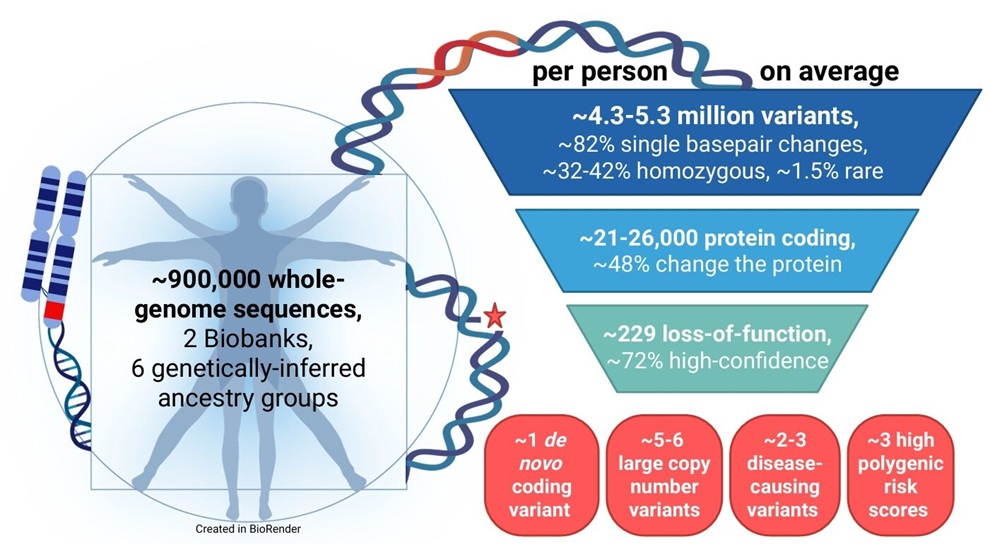
Population-Scale Genome Survey Supports Interpretation of Genetic Testing
27 Oct 2026  |   BioResearch

Single-Cell Profiling Reveals Chemotherapy Resistance Signals in Ovarian Cancer
27 Oct 2026  |   BioResearch

Genomic Tool Supports Analysis of Repeat Expansions Linked to Inherited Disorders
27 Oct 2026  |   BioResearch