


Population-Scale Genome Survey Supports Interpretation of Genetic Testing
Posted on 26 Oct 2026
Whole-genome sequencing is increasingly used to diagnose genetic disease and assess inherited risk. Interpreting its findings requires clinicians and patients to distinguish disease-linked variants from the broad genetic variation present in healthy populations. Population-scale context is therefore essential when considering genetic findings alongside symptoms, family history, and environmental factors.
A University of Exeter-led study characterized the “average” human genome using whole-genome sequencing data from nearly 1 million individuals. The work examined normal human genetic variation and how it relates to genetic disease risk. The paper, titled “The average individual genome: a survey of nearly 1 million whole-genome sequences,” was published in Genome Medicine and presented at the American Society of Human Genetics (ASHG) annual meeting.
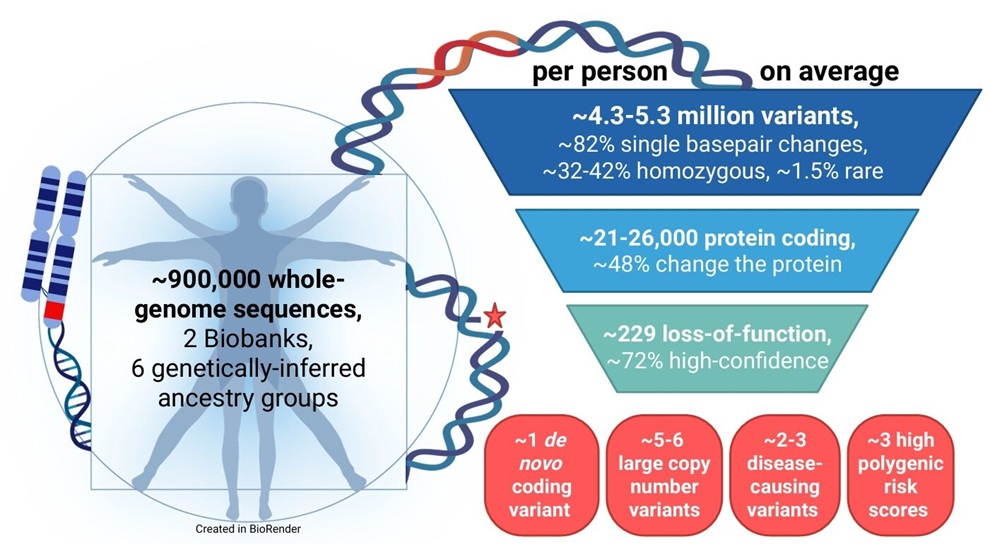
Drawing on two major population biobanks, UK Biobank and the U.S. All of Us study, the team found that each genome contained around 5 million variants, defined as DNA locations that differ between individuals. About 10,000 of these altered gene sequences, with potential effects ranging from lactose intolerance to drug response, although many were biologically neutral.
Within this variation, every person carried between one and three rare variants previously shown to cause serious genetic diseases, alongside about 50 rare variants of uncertain clinical relevance. The team also assessed polygenic risk scores for 28 common conditions, including diabetes, cardiovascular disease, and schizophrenia. These scores indicated that most people would be categorized as having high genetic risk for around three conditions.
The researchers did not examine participants’ health status, so many individuals with disease-linked findings may not have had the associated diseases. They concluded that such findings can reflect normal genetic variation and that other factors remain important in disease development. In a separate analysis of participants recruited with their parents, the team identified around 63 de novo variants per person, with the number increasing particularly with paternal age.
“Whole genome sequencing has become such an important tool in diagnosing genetic disease, and we're increasingly moving toward genetic screening for predicting disease. Yet most people are unaware of just how much genetic variation is present in every genome. Actually, variation is the norm. For the first time, our study outlines what to expect in the average human genome, which can benefit clinicians and patients across the world in understanding, interpreting and contextualizing genomics,” said Caroline Wright, senior author and professor at the University of Exeter.
“Importantly, we found that everyone carries a small number of genetic variants linked to disease, although many of these will not actually cause disease in that individual. It is therefore crucial to consider context when interpreting findings from genetic testing, including symptoms or family history of disease as well as other clinical and environmental risk factors. Our findings also provide important context for professionals who are interpreting genetic testing results or commissioning genetic screening programs,” said Prof. Wright.
Related Links
University of Exeter