Nanodroplet CRISPR Technology Supports Rapid, Multiplexed Mycobacterial Identification
Posted on 06 Oct 2026
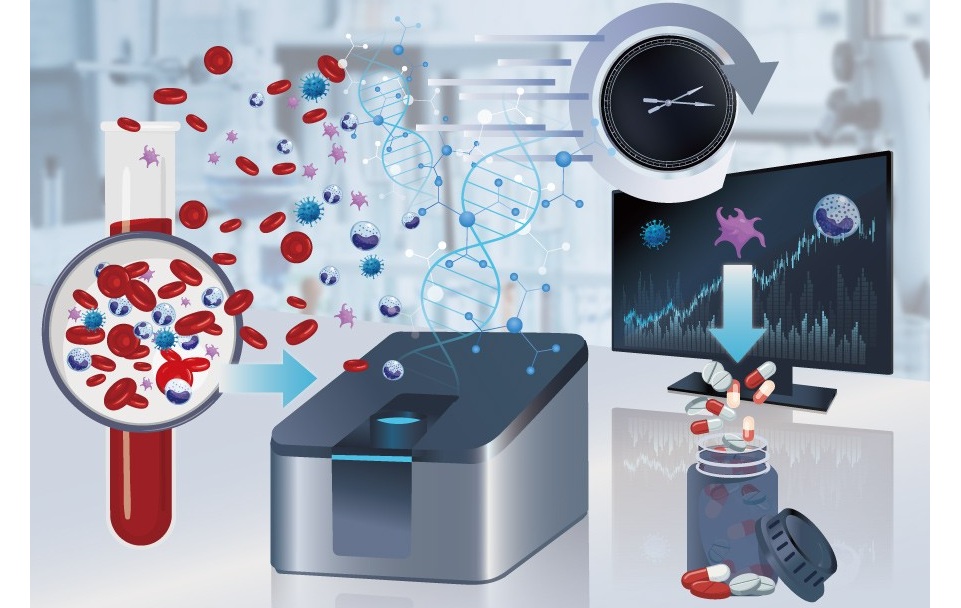
Mycobacterial infections are difficult to diagnose because closely related species can have different clinical and therapeutic implications. Nontuberculous mycobacteria (NTM) are increasingly recognized as important causes of pulmonary disease, while mixed infections and strain-level variation can complicate standard testing. Current methods, including culture, mass spectrometry, and molecular assays, remain important but can be limited in multiplex species identification. A new commentary highlights a CRISPR-based approach designed to combine broad detection with species-level analysis.
Researchers from Shanghai Jiao Tong University School of Medicine discuss the CRISPR-Assisted Nanodroplet-pairing Platform for Differential Identification of NTM (CANDI) in LabMed Discovery. The commentary examines a platform originally developed by the research group and published in Science Translational Medicine. CANDI integrates broad-range amplification, species-specific CRISPR recognition, fluorescence encoding, and microfluidic droplet pairing within a single diagnostic architecture.
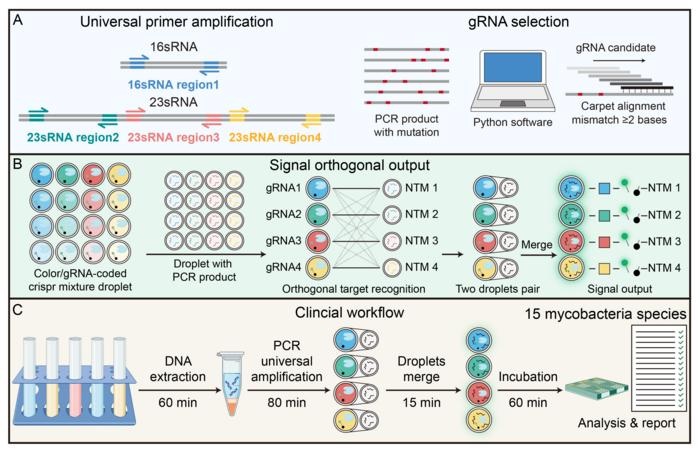
The platform uses a genome-informed design strategy. Its development included analysis of 103,332 Mycobacterium genomes to identify conserved regions in the 16S and 23S ribosomal RNA (rRNA) genes for broad-range amplification. Species-specific guide RNAs were then selected based on sequence differences between species, while also accounting for sequence conservation within target species.
This design is intended to support broad target coverage while preserving species-level specificity. It also aims to reduce missed detection linked to strain-level sequence variation. By separating amplification, molecular recognition, signal identity and spatial organization, CANDI offers a framework for scalable multiplex molecular detection without relying on increasingly complex multiplex primer designs.
The commentary also emphasizes CANDI’s ability to analyze mixed samples. The platform can identify multiple mycobacterial species simultaneously and was shown to resolve mixtures containing up to five species, including closely related organisms. In clinical evaluation, it detected some organisms not recovered by culture, which the authors suggest may reflect direct molecular analytical sensitivity or low-abundance organisms that are difficult to culture.
Further work is needed before CANDI can be used routinely in clinical laboratories. Key challenges include addressing genomic variation, interpreting low-abundance culture-independent detections in clinical context, and automating droplet generation, pairing, imaging and computational analysis. The authors identify development of a standardized sample-to-answer workflow as important for translating this type of multiplex molecular technology into clinical practice.
Related Links
Shanghai Jiao Tong University School of Medicine