Genomic Workflow Identifies Fungal Pathogens Before Blood Cultures Turn Positive
Posted on 06 Oct 2026
Fungal bloodstream infections pose a major threat to hospitalized patients. Candida species cause most invasive fungal infections worldwide and are among the leading causes of hospital-acquired bloodstream infections. Because fungal species can differ in their response to antifungal drugs, delayed identification can hinder timely targeted therapy. To accelerate species-level identification, researchers have introduced a genomic workflow that detects fungal pathogens from blood culture samples before conventional systems turn positive.
Chiba University (Chiba, Japan) researchers developed a workflow based on random PCR-based nanopore whole-genome sequencing for faster identification of fungal bloodstream infections. The approach analyzes blood culture samples while they are still incubating, before automated culture systems flag them as positive. The study was published online in Microbiology Spectrum on August 21, 2026.
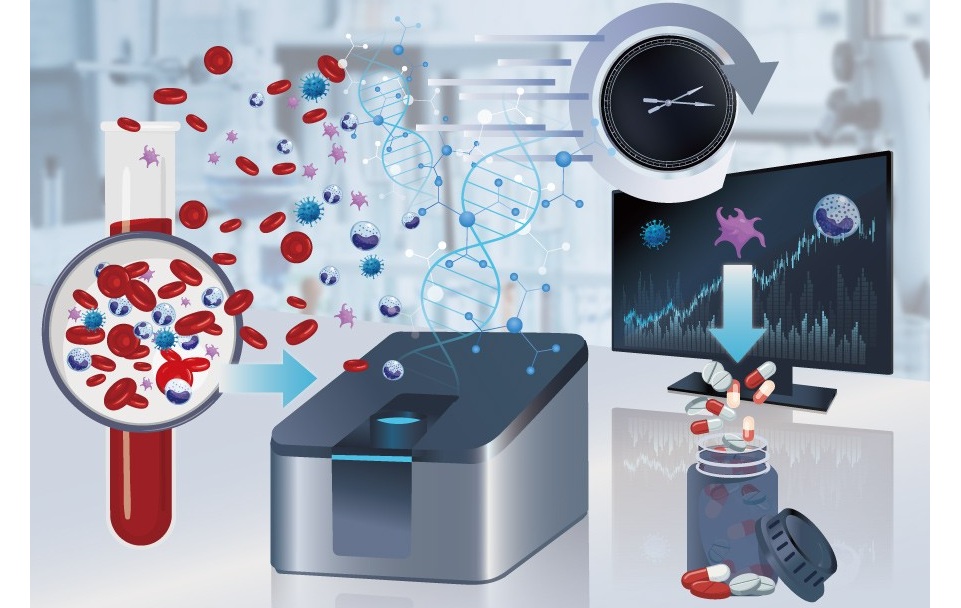
The workflow begins by selectively breaking down human cells and degrading human DNA with benzonase, while leaving fungal and bacterial DNA unaffected. This increases the proportion of microbial DNA in the sample. Researchers then use PCR-based whole-genome amplification to generate enough genetic material for sequencing. Amplified DNA is loaded onto a portable nanopore sequencing device, which produces DNA sequence data in real time and allows comparison with a custom reference database of fungal and bacterial bloodstream pathogens.
In testing with 48 clinical blood culture samples representing eight fungal species, the workflow achieved species-level identification within approximately seven hours. The method identified pathogens including Candida albicans, Nakaseomyces glabratus, Candida parapsilosis, Candida tropicalis, and Cryptococcus neoformans. It also detected mixed infections involving two fungal species or both fungi and bacteria.
Because the workflow captures the full genome of the pathogen, it can also detect genetic variants in genes associated with drug resistance. The researchers noted that further work is needed to determine optimal sample collection timing during incubation. They also identified a need to improve detection when heavy bacterial growth masks fungal signals in mixed infections.
“I have a background in sequence analysis and genomics, and I saw an opportunity to apply my expertise to the important clinical challenge of fungal infections. I was particularly motivated by the possibility of using modern genomic technologies to improve our understanding, diagnosis, and ultimately treatment of these infections,” said Hiroki Takahashi, professor at the Medical Mycology Research Center of Chiba University.
“Our method may enable clinicians to initiate appropriate antifungal treatment earlier, potentially improving outcomes for patients with life-threatening fungal bloodstream infections,” added Prof. Takahashi.
Related Links
Chiba University