Genetic Studies Uncover Mechanisms Driving Drug Resistance in Superbugs
Posted on 22 Sep 2026
Multidrug-resistant bacterial infections continue to complicate care in hospitals, where transmission can reach patients at greatest risk. As pathogens evade last‑line agents, laboratories face pressure to clarify the genetic and clinical routes that sustain resistance. Understanding how colonization progresses to bloodstream infection during chemotherapy‑related neutropenia is especially important for stewardship. New findings demonstrate complementary molecular and clinical strategies that illuminate resistance in Klebsiella pneumoniae and trace its spread to high‑risk patients.
Hackensack Meridian Center for Discovery and Innovation (CDI; Nutley, NJ, USA) describes three coordinated investigations published in Antimicrobial Agents and Chemotherapy that span genetics, pharmacology, and clinical epidemiology. One study mapped genome‑wide determinants of susceptibility in carbapenem‑resistant Klebsiella pneumoniae using high‑density transposon sequencing (TnSeq). A second defined how pathogens evade cefiderocol, a siderophore cephalosporin that exploits bacterial iron‑uptake channels. A third tracked transmission dynamics in patients undergoing intensive chemotherapy to connect colonization with subsequent bloodstream infection.
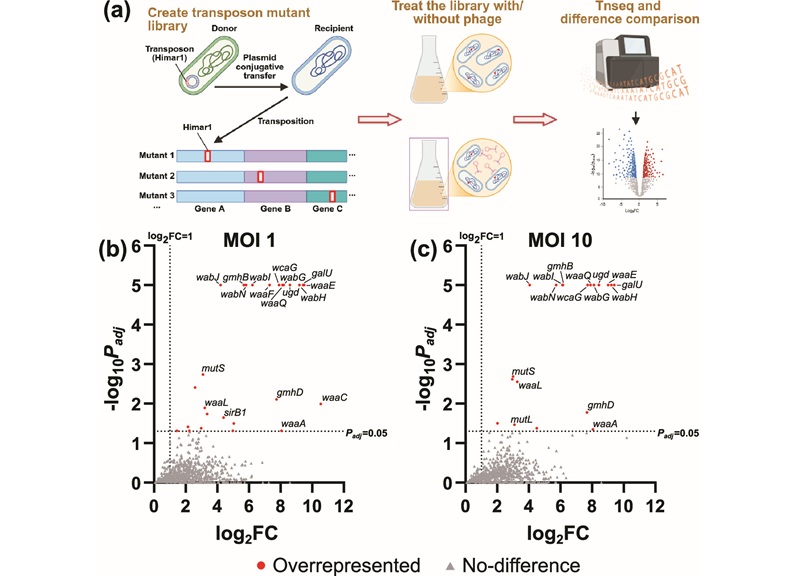
In the genetic screen, researchers found that when superbugs alter outer-surface receptors to evade bacteriophages, they incur a trade-off that restores susceptibility to last-line antibiotics, including meropenem, colistin, and cefiderocol. The cefiderocol analysis further identified a multilayered resistance network centered on cell-envelope homeostasis and blaKPC-3 β-lactamases. Deleting blaKPC-3 from resistant strains reduced minimum inhibitory concentrations (MICs) fourfold, suggesting that low intracellular drug levels allow even modest enzyme activity to sustain high-level resistance. Together, these findings identify genetic mechanisms that shape antibiotic susceptibility in ST258 K. pneumoniae.
The prospective clinical study followed 159 adults with acute leukemia or myelodysplastic syndrome during chemotherapy-induced neutropenia. Among patients colonized with extended-spectrum β-lactamase-producing Enterobacterales (ESBL-E), 20% developed bloodstream infections caused by matching strains. Whole-genome sequencing (WGS) confirmed complete concordance between colonizing and bloodstream isolates, supporting targeted screening to inform prophylactic antibiotic use while limiting unnecessary treatment.
All three papers appear in Antimicrobial Agents and Chemotherapy and reflect collaborations with the University at Buffalo and Weill Cornell Medicine alongside CDI scientists. The work integrates molecular genetics with patient‑level surveillance to clarify how resistance emerges and moves from colonization to invasive disease in vulnerable patients, offering laboratory‑grounded insights for antimicrobial stewardship and infection prevention programs.
"These studies collectively show how we are tracking and better understanding the many forms of drug resistance that bacterial pathogens evolve, given the opportunity," said Barry N. Kreiswirth, a member of the CDI and professor at the Hackensack Meridian School of Medicine.
"By bridging molecular genetics, genomics and clinical epidemiology, Kreiswirth and his lab continue to uncover the underlying rules of bacterial survival—which are pointing the way toward better clinical outcomes," said David Perlin, chief scientific officer and executive vice president of the CDI.
Related Links
Hackensack Meridian CDI