Machine Learning Supports Targeted Screening for Elevated Lipoprotein(a)
Posted on 16 Sep 2026
Lipoprotein(a) is an independent, genetically determined risk factor for atherosclerotic cardiovascular disease, yet routine screening remains uncommon despite guideline recommendations, leaving many high-risk patients unidentified. Operational barriers further limit health systems’ ability to offer universal testing across large cardiovascular populations. To support more targeted screening, the Family Heart Foundation has developed a machine learning model to identify patients with established atherosclerotic disease who may benefit from lipoprotein(a) testing.
The Family Heart Foundation’s FIND Lp(a) Machine Learning Model was described in a study published on September 9, 2026, in JACC: Advances. Designed to help health systems prioritize testing, the model identifies individuals with atherosclerotic cardiovascular disease who are most likely to have elevated lipoprotein(a). This targeted approach is part of a broader effort to expand testing toward guideline-recommended universal screening.
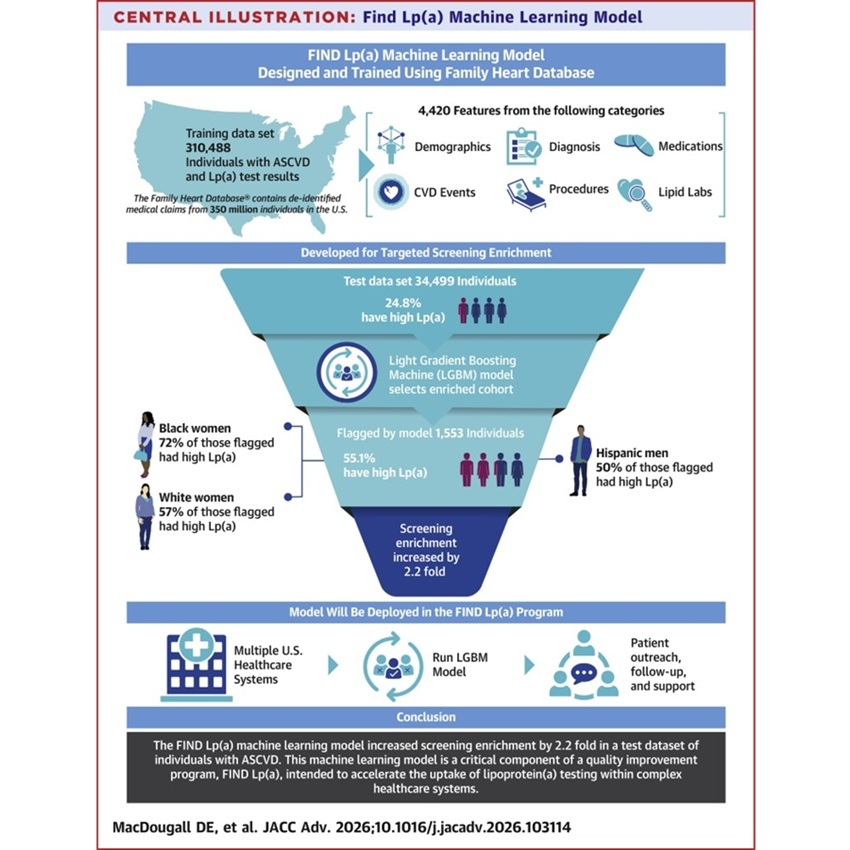
The model applies predictive analytics to data commonly available in electronic medical records. It produces a prioritized list of patients who warrant lipoprotein(a) testing and is designed to align with existing clinical workflows. This targeted approach seeks to concentrate laboratory resources where the likelihood of elevated levels is highest.
Development and initial validation used the Family Heart Database. In that population, patients flagged by the model were more than 2.2 times as likely to have high lipoprotein(a), defined as 125 nmol/L or greater, compared with the overall atherosclerotic cardiovascular disease cohort. Additional validation using retrospective and prospective health care system data is underway.
The model has already been deployed across five large U.S. health care systems within the foundation’s Flag, Identify, Network and Deliver (FIND) Lp(a) program. Participating systems offer testing to individuals identified by the program, and those with high levels receive care and opportunities to engage with the foundation for education and support. Through a Collaborative Learning Network, partners are prospectively assessing real‑world performance, sharing best practices, and establishing sustainable screening pathways.
High lipoprotein(a) awareness remains low among clinicians, health system administrators, payers, and the public. Evidence cited by the foundation indicates that one in five people has high levels, yet an estimated 99% of people in the United States have never been screened. These gaps underscore the potential role for targeted, system‑level solutions.
“Although recently released U.S. dyslipidemia guidelines recommend Lp(a) screening for all adults, integrating this into routine clinical practice will take many years, if not decades,” said Diane MacDougall, vice president of research at the Family Heart Foundation and principal author of the study.
“The FIND Lp(a) model supports targeted screening by helping identify people most likely to have high Lp(a), accelerating the adoption of universal screening and creating more opportunities for individuals living with high Lp(a) and their health care teams to manage cardiovascular risk,” said MacDougall.
Related Links
The Family Heart Foundation