Blood Test Helps Predict Short-Term Mortality After Severe Heart Attack
Posted on 07 Jul 2026
ST-elevation myocardial infarction (STEMI) is a severe heart attack caused by complete blockage of a coronary artery. Early risk stratification at hospital admission is challenging but essential for guiding monitoring and invasive care. Although infarction rapidly mobilizes white blood cells from bone marrow, the prognostic value of this immune response has remained unclear. A new study shows that the maturity of circulating neutrophils, measured with a routine blood test, can indicate short-term mortality risk.
A research team at the University of Münster reports that the extent of neutrophil mobilization from the bone marrow correlates with disease severity and survival after heart attack. The researchers highlight the immature granulocyte (IG) count in peripheral blood as a prognostic marker following acute myocardial infarction. Because IG levels can be measured through a standard differential blood count, the marker may be readily available in most hospital settings.
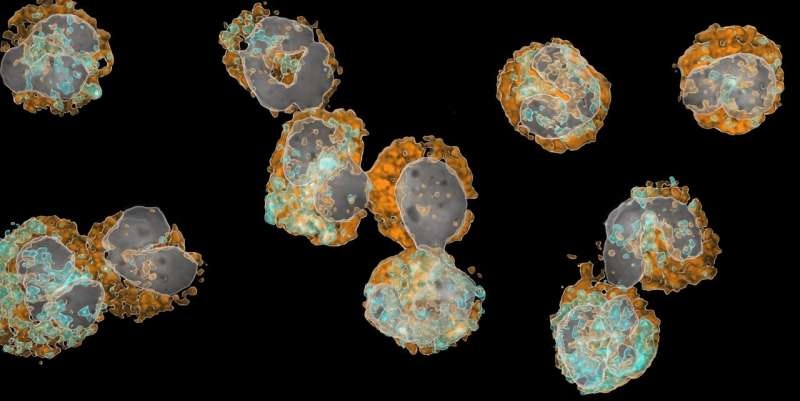
The team analyzed blood samples from more than 200 individuals who had experienced a heart attack, stroke, or heart failure, alongside healthy controls. High-resolution spectral flow cytometry was used to define discrete stages of neutrophil maturation. This approach allowed precise, simultaneous characterization of individual cells based on numerous features.
Release of immature cells was most pronounced in STEMI, the form in which a coronary artery is completely occluded. Very immature precursor cells, termed preneutrophils, were detected in these patients. Plasma profiling revealed a coordinated inflammatory pattern accompanying heightened cell mobilization. The presence of the most immature precursors was linked to a higher short-term risk of death.
The predictive value of IG was verified in two further independent patient groups comprising several hundred individuals, including retrospective and prospective cohorts. IG outperformed established biomarkers for predicting death within the first 30 days. The association remained independent after accounting for other risk factors. The findings, published in Nature Cardiovascular Research on July 3, 2026, suggest a widely available laboratory parameter could help identify high-risk patients on admission, though further confirmation in independent cohorts is required before clinical adoption.
“For clinical practice, it is important that these immature cells can be detected using a simple differential blood count, a laboratory test available in almost every hospital, which determines the exact composition of white blood cells. They can be identified as immature granulocytes (IG),” said Mathis Richter, first author and Ph.D. student.
“We now have a better understanding of the close communication between the damaged heart and the bone marrow. Our next step is to clarify exactly which signals trigger this increased cell release, as this could provide future targets for new treatments,” said Oliver Soehnlein, Professor at the Institute of Experimental Pathology at the Center for Molecular Biology of Inflammation, University of Münster.
Related Links
University of Münster





.jpg)