Gene Expression Model Guides Neoadjuvant Therapy Selection in Breast Cancer
Posted on 27 Apr 2026
Predicting which patients with early breast cancer will benefit from chemotherapy before surgery remains difficult. Reliable upfront markers are lacking. In hormone-dependent, HER2-negative disease, overall responses to different preoperative regimens can be similar while individual tumors vary. A new study shows that tumor gene expression can identify patients unlikely to benefit from preoperative chemotherapy and better suited to palbociclib plus hormone‑blocking therapy.
Karolinska Institutet researchers developed CDKPredX, a gene expression-based model designed to forecast chemotherapy response in hormone‑dependent, HER2‑negative breast cancer. The model was derived from analyses of pretreatment tumor samples to distinguish tumors with poor chemotherapy response and better response to palbociclib combined with hormone‑blocking therapy. Investigators report that the model aims to guide selection between these approaches before surgery.
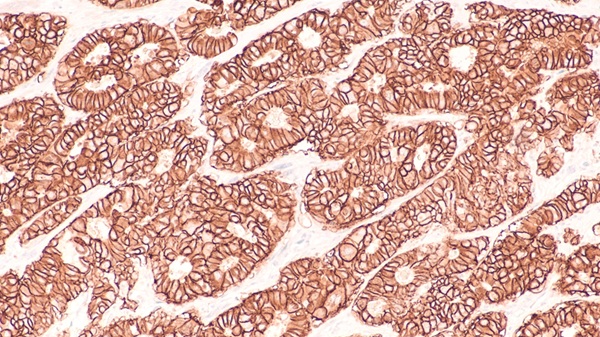
CDKPredX evaluates patterns of tumor gene expression, including genes involved in cell division, hormone signaling, and the immune system. When tested in additional patient groups, the researchers observed similar patterns, supporting the model’s potential to stratify tumors by likely treatment response. The team emphasizes that these analyses were performed on tissue obtained prior to therapy initiation.
The work draws on the Swedish PREDIX LumB randomized phase II trial, which included 179 patients with hormone‑dependent, HER2‑negative breast cancer. Before surgery, all participants received both treatment modalities but in different sequences: chemotherapy followed by hormone‑blocking therapy with palbociclib, or the reverse sequence. Investigators then compared tumor size reduction and survival across the two sequences.
Overall, the two sequences produced similar reductions in tumor size and similar survival outcomes. However, a subgroup showed poorer response to chemotherapy and better response to palbociclib plus hormone‑blocking therapy, which CDKPredX was developed to identify. The researchers characterize the study as exploratory and state that the genetic analysis is not yet ready for clinical use. The findings are published in Nature Communications.
"Today, we lack reliable ways to determine in advance which patients will actually benefit from chemotherapy before surgery. Our results show that tumor gene expression can provide important information in this respect," said first author Alexios Matikas, docent at the Department of Oncology-Pathology, Karolinska Institutet.
“In the longer term, this type of analysis could help patients avoid treatments that do not benefit them, such as chemotherapy, and instead receive treatment that has a better chance of working. At the same time, further studies are needed before the method can be used in clinical practice,” said Theodoros Foukakis, professor at the Department of Oncology-Pathology, Karolinska Institutet.
Related Links
Karolinska Institutet