Plug-and-Play AI Pathology System Classifies Multiple Cancers from Few Slides
Posted on 24 Apr 2026
Pathologists are essential for cancer diagnosis and treatment planning, yet a global workforce shortage is straining services. Nearly 20 million new cases are diagnosed each year, and traditional artificial intelligence (AI) tools require massive datasets and repeated retraining for each tumor type. These hurdles slow deployment, particularly across diverse clinical settings. Researchers now introduce a plug-and-play pathology system that classifies multiple cancers from only a few annotated slides.
At The Hong Kong University of Science and Technology (HKUST), investigators developed PRET (Pan-cancer Recognition without Example Training), a pathology analysis system designed to recognize multiple tumor types from minimal samples without additional training. Positioned as a plug-and-play tool for digital pathology, PRET targets routine diagnostic tasks that can burden laboratory workflows.
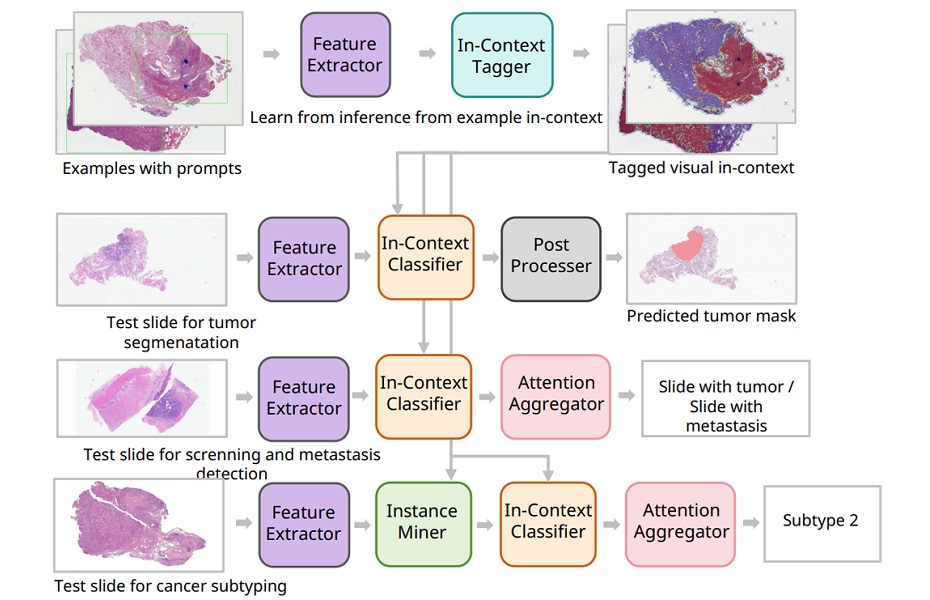
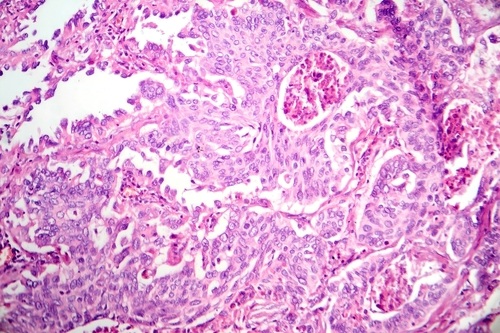
The system applies “in-context learning,” a strategy adapted from natural language processing, to whole-slide image analysis. During inference, PRET adapts to new cancer types and tasks by referencing just one to eight annotated tumor slides, rather than relying on task-specific fine-tuning. The approach is described as supporting cancer screening, tumor subtyping, tumor segmentation, and lymph node metastasis detection.
Validation drew on 23 international benchmark datasets from institutions in the Chinese Mainland, the United States, and the Netherlands, encompassing 18 cancer types and multiple diagnostic tasks. PRET demonstrated stable, robust generalizability across different populations and regions with varying medical resources. The evaluation addressed clinically relevant endpoints across settings.
Across these datasets, the system outperformed existing methods in 20 tasks. Its area under the curve (AUC), a measure of diagnostic accuracy, exceeded 97% in 15 tasks; results included an AUC of 100% in colorectal cancer screening and 99.54% in esophageal squamous cell carcinoma tumor segmentation. For lymph node metastasis detection, PRET achieved an AUC of approximately 98.71% using only eight slide samples, surpassing the average performance of 11 pathologists, whose AUC averaged approximately 81%.
The study is published in Nature Cancer. Collaborating institutions included Guangdong Provincial People’s Hospital and Harvard Medical School. The team plans to further enhance performance and extend applications to genetic mutation prediction and patient prognosis assessment.
“The core value of the PRET system lies in breaking down the traditional barriers of ‘massive data and repetitive training,’ enabling AI-powered pathology systems to be applied in real clinical settings at lower cost and with greater flexibility. This not only helps alleviate the workload pressure faced by pathologists, but also has the potential to improve access to cancer diagnosis in underserved regions,” said Prof. Li Xiaomeng, Assistant Professor of the Department of Electronic and Computer Engineering and Associate Director of the Center for Medical Imaging and Analysis, The Hong Kong University of Science and Technology.
“Through this ‘plug-and-play’ system, we hope that advanced and precise AI-powered diagnostic services can transcend geographical and resource constraints, thereby promoting global health care equity,” said Prof. Li Xiaomeng.
Related Links
HKUST