Framework Guides Targeted Immunotherapy Selection in Liver Cancer
Posted on 20 Apr 2026
Primary liver cancer, encompassing hepatocellular carcinoma (HCC) and intrahepatic cholangiocarcinoma (iCCA), is the world’s third-leading cause of cancer-related death, responsible for about 830,000 deaths and nearly one million new cases each year. Many patients are diagnosed at advanced stages and face limited treatment options despite recent therapeutic advances. Aligning specific therapies with biologic drivers remains a major challenge. Researchers now present a comprehensive roadmap that links the hallmarks of liver tumors to targeted and immunotherapy strategies, including precision oncology opportunities.
The Icahn School of Medicine at Mount Sinai, in collaboration with Hospital Clínic de Barcelona, details this approach in Hallmarks of Liver Cancer: Therapeutic Implications, a review published on April 14 in Cell. The work maps the widely used Hallmarks of Cancer framework onto primary liver cancer to directly connect disease biology with treatment selection. Positioned as a clear guide to understanding and treating this malignancy, it emphasizes immunotherapy and precision medicine options where biologically appropriate.
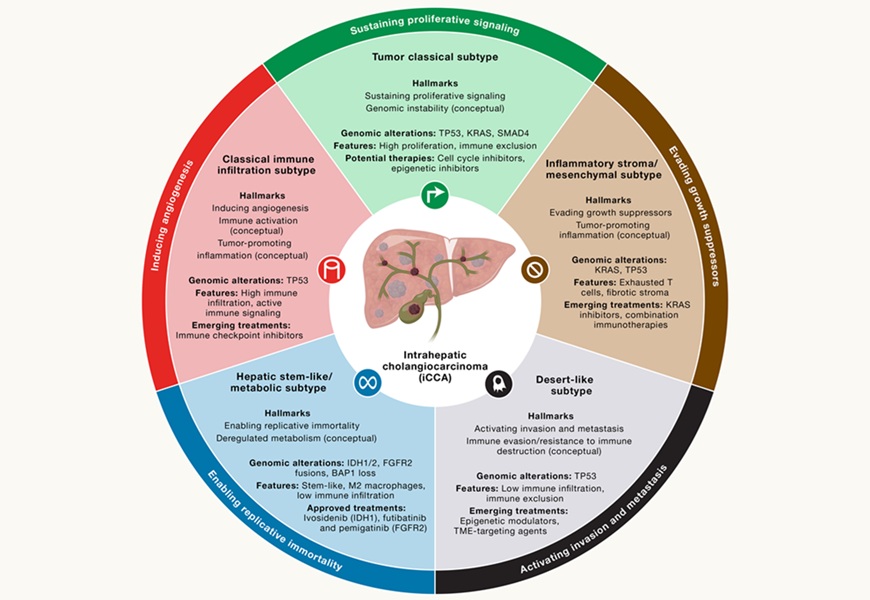
The framework delineates key biological processes that enable tumor growth and spread. In hepatocellular carcinoma, dominant features include sustained proliferative signaling, angiogenesis, and immune evasion. In contrast, intrahepatic cholangiocarcinoma more often shows altered metabolism and a higher prevalence of targetable genetic alterations.
The synthesis underscores that approximately 45% of iCCA tumors harbor actionable genomic changes, including FGFR2 fusions, IDH1 mutations, ERBB2 alterations, and BRAF mutations, highlighting opportunities for precision therapy. It also notes that treatment for advanced liver cancer has improved over the past two decades, with modern immunotherapy combinations extending survival beyond two to three years for some patients. Marking the 25th anniversary of the Hallmarks of Cancer framework, the authors present a practical structure to guide clinicians in matching patients to targeted therapies and immunotherapies.
“This framework helps clinicians better match patients with the therapies most likely to benefit them. It also provides a roadmap for developing new treatments by identifying the key vulnerabilities of each tumor,” said Daniela Sia, Ph.D., Associate Professor of Medicine (Liver Diseases) at the Icahn School of Medicine.
“This review is designed to bridge the gap between laboratory discoveries and patient care. Our goal is to accelerate the development of more effective therapies and ultimately improve survival for patients with liver cancer,” said Josep M. Llovet, MD, Ph.D., Professor of Medicine at the Icahn School of Medicine (Liver Diseases) at Mount Sinai and Director of the Liver Cancer Program at the Mount Sinai Tisch Cancer Center.
Related Links
The Icahn School of Medicine at Mount Sinai
Hospital Clínic de Barcelona