Collaboration Applies AI Pathology to Predict Response to Antibody-Drug Conjugates
Posted on 15 Apr 2026
Antibody-drug conjugates (ADC) are reshaping oncology, yet scalable biomarkers that reliably predict which patients will benefit remain limited as treatment regimens and combinations grow more complex. Clinical programs frequently depend on assays beyond standard histology, adding cost and turnaround time and constraining trial enrollment. A new collaboration will apply an artificial intelligence (AI) pathology platform to routine hematoxylin and eosin (H&E) slides to generate interpretable predictive biomarkers for an ADC program, aiming to streamline patient selection and accelerate clinical development.
4D Path and Daiichi Sankyo have entered a collaboration to develop next-generation predictive biomarkers for an ADC clinical development program. The effort centers on 4D Path’s proprietary Q-Plasia OncoReader (QPOR) platform, which is designed for use on standard H&E-stained tumor biopsy slides. The partners intend to evaluate biomarkers produced by this approach for their ability to identify patients most likely to benefit from a selected ACD.
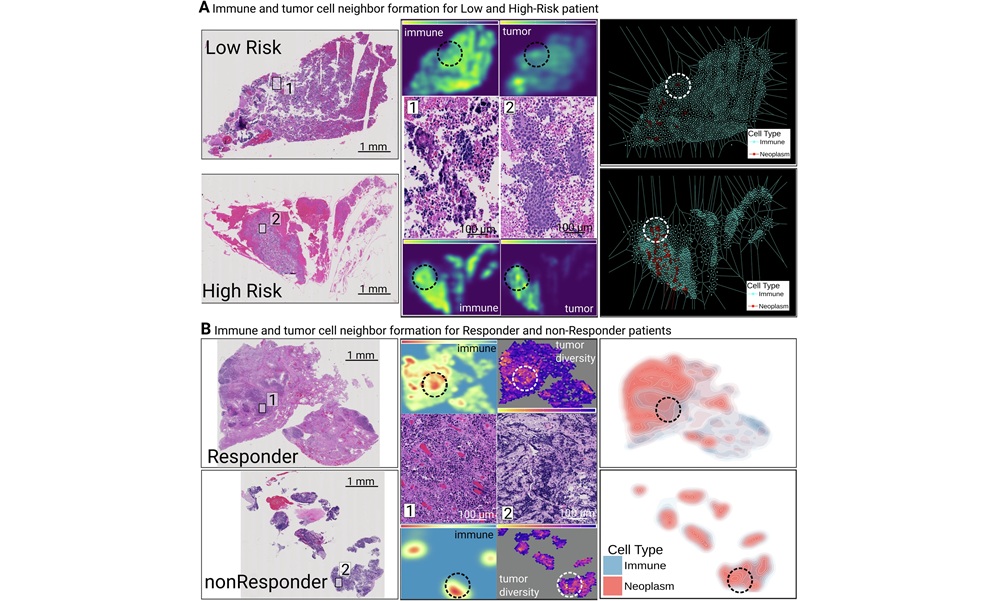
QPOR applies a physics-informed AI methodology to compute interpretable, quantitative biomarkers associated with cell-cycle deregulation and tumor microenvironment dynamics directly from routine pathology specimens. By transforming pathology images into actionable variables that reflect collective tumor states, the platform is intended to support more precise, non-invasive, and cost-effective patient selection. The collaboration is structured to enable both retrospective analyses of archived clinical specimens and prospective evaluation in ongoing and future studies.
Beyond patient stratification, the collaboration is expected to generate functional mechanistic insights into tumor-specific patterns of response and resistance, illuminating how biological context may interact with ACD designs. The partners state that this image-based, AI-driven strategy can be deployed at scale using standard-of-care specimens, supporting faster, more confident treatment decisions and potentially improving the probability of success in clinical development. The initiative underscores a broader trend toward digital pathology biomarkers that can be integrated efficiently within translational and clinical workflows.
“While the introduction of ADCs has improved outcomes for patients, more advanced biomarkers that are predictive of response to these agents is needed. 4D Path’s novel approach to utilizing biological and physical characteristics from routine H&E-stained biopsy slides to predict benefit from ADCs has the potential to improve outcomes, helping patients get the right therapy at the optimal time in their disease course,” said Lee Schwartzberg, medical oncologist and Scientific Advisory Board member, 4D Path.
“The deep precision medicine focus of this collaboration in digital pathology brings in 4D Path’s QPOR platform-derived pan-cancer insights identifying patients likely to respond to treatment, by one-shot computation of cell cycle and tumor microenvironment dynamics from routine tissue images. Additionally, this will potentially shed light on tumor specific biological understanding of response and resistance, enriching knowledge of the relative impact of targets, linkers, and payloads on outcomes and accelerating precision ADC treatments,” said Satabhisa Mukhopadhyay, Ph.D., co-founder and chief scientific officer at 4D Path.
Related Links
4D Path
Daiichi Sankyo