AI Improves Completeness of Complex Cancer Pathology Reports
Posted on 11 Apr 2026
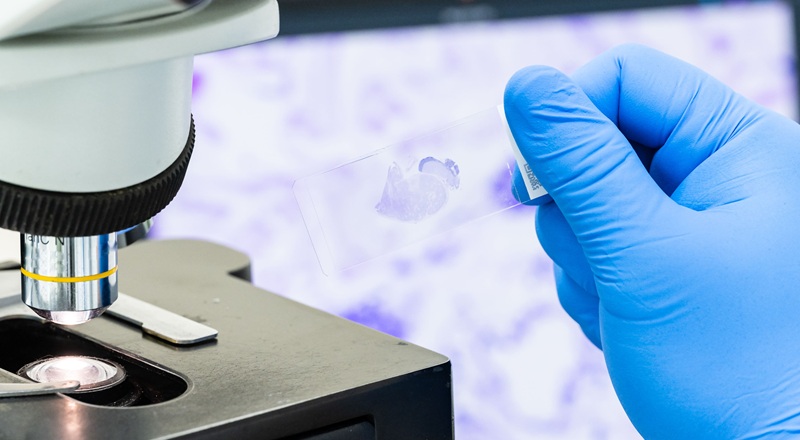
Oncology teams increasingly rely on pathology reports that integrate histopathology, immunohistochemistry, and rapidly expanding biomarker testing. As patients live longer and undergo repeated analyses across institutions, these reports can become lengthy and difficult to synthesize under time pressure. Omitting molecular or genomic details can affect treatment selection and documentation quality. A new study shows that artificial intelligence can produce more complete summaries of these complex cancer reports.
Northwestern University Feinberg School of Medicine (Chicago, IL, USA) researchers evaluated open-source large language models (LLMs) for automatically summarizing cancer pathology reports. The approach centers on using LLMs to convert free‑text narratives into structured, clinician‑oriented summaries. The findings were published in JCO Clinical Cancer Informatics on April 8, 2026.
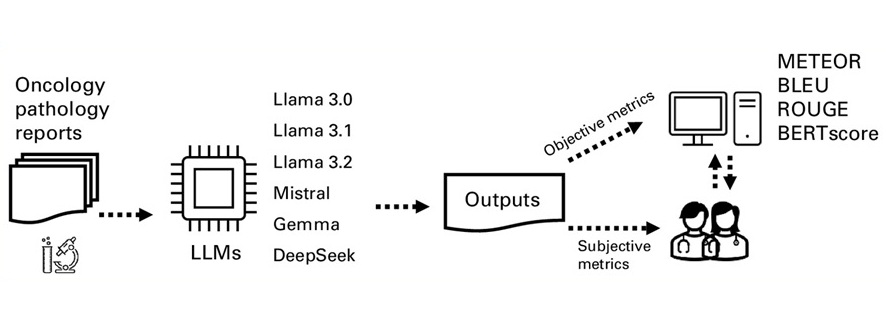
The technology tested included six downloadable, locally runnable LLMs: Meta’s Llama 3.0, 3.1, and 3.2 models; Google’s Gemma 9B; Mistral 7.2B; and DeepSeek‑R1. These systems parsed the text of de‑identified reports and generated summaries that captured key domains such as histopathological descriptions, immunohistochemical results, and molecular and genetic data relevant to treatment. The goal was to standardize extraction of clinically salient details that can otherwise be scattered across lengthy documents.
Investigators analyzed 94 de‑identified pathology reports from lung cancer patients and compared the AI‑generated summaries with clinical summaries previously written by physicians. A panel of oncologists assessed each summary for accuracy, completeness, conciseness, and potential clinical risk. Across models, AI‑generated summaries were consistently rated as more complete, with the most pronounced gains in inclusion of molecular and genomic findings; DeepSeek and Llama 3.1 performed best among the models evaluated.
The authors describe the innovation as a support layer to augment, not replace, clinical expertise by highlighting key findings, identifying missing information, and improving consistency in documentation. They note ongoing development of an application using Llama 3.1 to enable clinician review of AI‑generated summaries, with additional testing and validation planned prior to deployment.
“As cancer care becomes increasingly complex, the burden of synthesizing complex reports is growing rapidly. What we’re seeing is that AI can help ensure critical pathological and genomic details are consistently captured—not as a replacement for physicians, but as a tool to augment clinical decision-making,” said Mohamed Abazeed, chair and professor of radiation oncology at Northwestern University Feinberg School of Medicine.
“If AI can reliably synthesize these reports, clinicians can review key findings more efficiently, important genetic details are less likely to be overlooked and documentation becomes more standardized. This could help physicians focus more on patient care,” said Troy Teo, instructor of radiation oncology at Feinberg.
Related Links
Northwestern University Feinberg School of Medicine