






World’s First Optical Microneedle Device to Enable Blood-Sampling-Free Clinical Testing
Posted on 06 Mar 2026
Blood sampling is one of the most common clinical procedures, but it can be difficult or uncomfortable for many patients, especially older adults or individuals with certain medical conditions. In some cases, repeated venous punctures are required for monitoring conditions such as diabetes, adding both physical and psychological burdens. Researchers are now exploring technologies that could enable diagnostic testing without the need for blood draws.
Researchers at the University of Tokyo (Tokyo, Japan) have developed a microneedle-based device designed to measure glucose levels using interstitial fluid (ISF) collected from the skin. The work, published in the Journal of Materials Chemistry, describes an optical microneedle made from polylactic acid, a biodegradable polymer. ISF, found between cells in the skin, contains many biological molecules similar to those present in blood and is increasingly being explored as an alternative diagnostic sample.
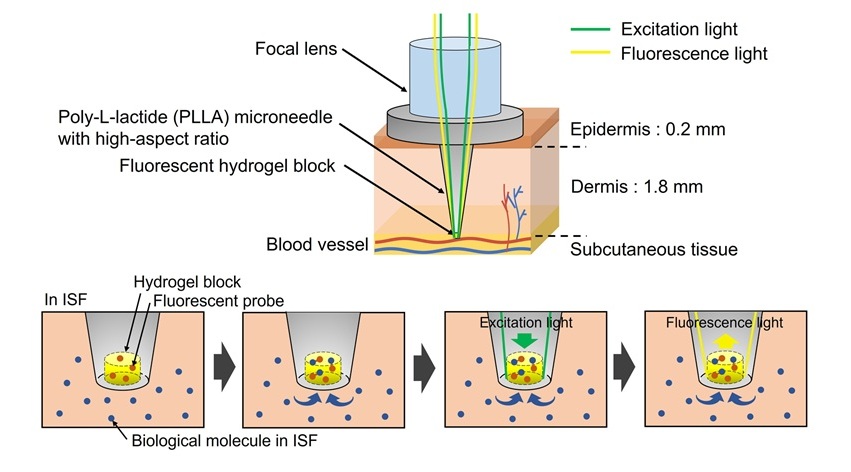
The researchers designed a transparent microneedle approximately 2 millimeters long with a small pocket at its tip measuring 100 micrometers in diameter and depth. The pocket contains a fluorescent hydrogel incorporating boronic acid, a compound that binds reversibly with glucose molecules. When glucose is detected, the hydrogel emits fluorescence when exposed to light. The fluorescence signal is measured using an optical system and correlates with the glucose concentration present in extremely small ISF samples—less than one nanoliter in volume.
Importantly, unlike enzyme-based glucose tests, the method does not consume the glucose during measurement. The device achieved measurement errors between 0.0 percent and 9.6 percent, which falls within the accuracy range of commercially available blood glucose meters. Because the microneedle device uses biodegradable materials and requires only minimal penetration of the skin, it may offer a less invasive alternative to conventional blood sampling.
The ability to measure glucose without consuming the target molecule also increases measurement accuracy when analyzing extremely small biological samples. Researchers suggest that similar devices could eventually support clinical testing using interstitial fluid rather than blood, potentially improving comfort for patients and enabling more convenient monitoring in home healthcare settings. The researchers noted that optical microneedle devices with functional hydrogels at their tips allow quantitative analysis without consuming the target compound, making them suitable for testing extremely small biological samples and potentially enabling clinical diagnostics without conventional blood draws.
Related Links:
University of Tokyo










_image.png)