New Diagnostic Markers for Multiple Sclerosis Discovered in Cerebrospinal Fluid
Posted on 04 Mar 2026
Multiple sclerosis (MS) affects nearly three million people worldwide and can cause symptoms such as numbness, visual disturbances, fatigue, and neurological disability. Diagnosing the disease can be challenging because many neurological conditions produce similar symptoms. Although MRI scans and cerebrospinal fluid (CSF) analysis are commonly used, current molecular markers do not always provide clear answers, particularly in patients who lack typical diagnostic indicators. Researchers have now identified new protein biomarkers that may improve MS diagnosis and help predict disease progression.
Researchers at the Max Planck Institute of Biochemistry (Martinsried, Germany) and the Technical University of Munich (TUM, Munich, Germany) used advanced mass spectrometry to analyze the protein composition of CSF samples from more than 5,000 patients with various neurological conditions. The method enabled simultaneous measurement of approximately 1,500 proteins per sample and up to 2,000 proteins using an improved workflow. This large-scale proteomic analysis allowed scientists to identify patterns of protein changes associated with MS and other neurological diseases.
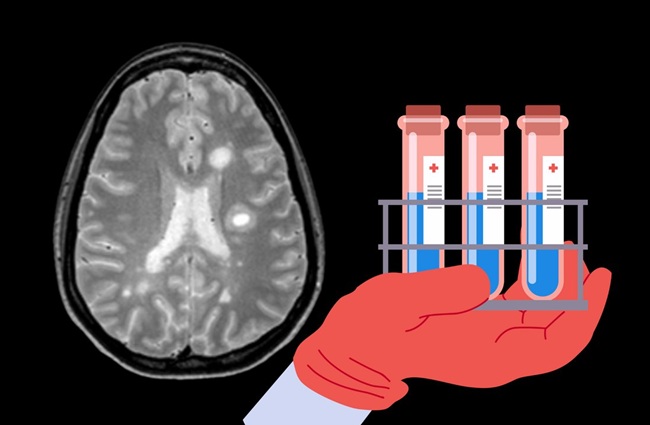
The researchers discovered a panel of 22 proteins that distinguishes MS from other inflammatory diseases of the central nervous system, particularly in patients who lack the traditional diagnostic marker known as oligoclonal bands. The study, published in Cell, also showed that protein patterns in CSF at the time of diagnosis were associated with future disease progression. These patterns were linked to long-term disability, the risk of transitioning from a relapsing to a progressive disease course, and the time required for that transition to occur.
The findings suggest that proteomic profiling of CSF could enable earlier and more precise MS diagnosis while also helping clinicians predict how the disease will evolve in individual patients. This information may support more personalized treatment strategies and earlier therapeutic intervention. Researchers note that the large-scale proteomic approach could also be applied to other neurological disorders, including Alzheimer’s disease, Parkinson’s disease, brain tumors, and other conditions affecting the central nervous system.
“With the methodology established here, we can now analyze the proteome in the CSF of many patients with an unprecedented number of proteins,” said Professor Matthias Mann, director at the MPI of Biochemistry and a world-leading expert in proteomics research. “This technological progress changes how we should search for biomarkers. Comprehensive proteome analysis of large patient collectives promise to be the most efficient path to new and better biomarkers. Beyond MS, this approach opens up prospects for many other diseases of the central nervous system – from Alzheimer's and Parkinson's to brain tumors and other neurological disorders."
Related Links:
MPI of Biochemistry
TUM