AI-Powered Biomarker Predicts Liver Cancer Risk
Posted on 19 Feb 2026
Liver cancer, or hepatocellular carcinoma, causes more than 800,000 deaths worldwide each year and often goes undetected until late stages. Even after treatment, recurrence rates reach 70% to 80%, contributing to high mortality. Identifying livers at risk before tumors develop remains a major unmet clinical need. Now, new research has identified a gene-driven microenvironment linked to tumor formation and developed a machine-learning score that predicts future liver cancer risk.
In a study, researchers at the RIKEN Center for Integrative Medical Sciences (Yokohama, Japan) focused on MYCN, a gene implicated in liver cancer arising from damaged livers, and investigated how its overexpression contributes to tumorigenesis. Using a hydrodynamic tail vein injection-based transposon system, the team induced MYCN overexpression in mouse livers.

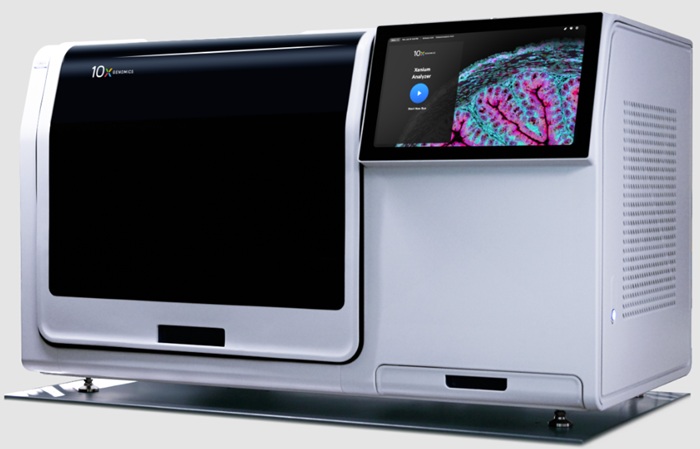
Spatial transcriptomics was then employed to map gene activity over time and location, identifying a cluster of 167 genes associated with increased MYCN activity, termed the “MYCN niche.” When MYCN was overexpressed alongside continuously active AKT, 72% of mice developed liver tumors within 50 days, displaying features consistent with human hepatocellular carcinoma. Overexpression of either gene alone did not produce tumors.
The study, published in Proceedings of the National Academy of Sciences, introduced a machine-learning model trained on spatial gene-expression data to generate a MYCN niche score with 93% accuracy. In human datasets, higher scores correlated with increased recurrence risk and poorer outcomes, particularly when derived from non-tumor liver tissue.
The MYCN niche score represents a spatial biomarker capable of identifying precancerous microenvironments before tumors appear. By profiling non-tumor liver tissue, clinicians may be able to stratify patients based on recurrence risk and guide surveillance strategies. Researchers aim to further investigate the biological mechanisms underlying the score and explore how cancer-permissive microenvironments are established and maintained, advancing prevention and precision oncology approaches.
“We have developed a clinically actionable strategy to identify high-risk patients by profiling gene expression in non-tumor liver tissue,” said Xian-Yang Qin, RIKEN Center for Integrative Medical Sciences, and lead author of the study. “By integrating spatial transcriptomics with machine learning, we have established a MYCN niche score that predicts recurrence risk and detects precancerous microenvironments predisposed to de novo liver tumorigenesis.”
Related Links:
RIKEN Center for IMS