Single-Use Test Strip to Revolutionize Disease Diagnosis
Posted on 09 Feb 2026
Early detection is critical for diseases such as cancer, but many biological warning signals circulate in the blood at levels too low to be reliably detected. MicroRNAs are among the most promising early biomarkers, yet their extremely low concentrations often place them beyond the reach of standard laboratory tests. This diagnostic gap limits early intervention and timely treatment decisions. A new single-use test strip now demonstrates that these elusive molecular signals can be detected quickly and sensitively without complex lab infrastructure.
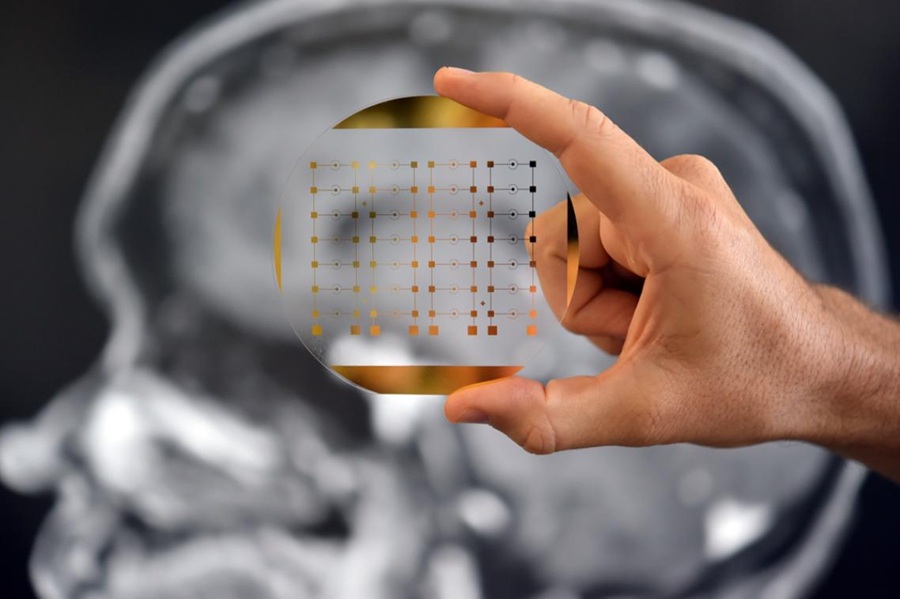
Inspired by glucose test strips, the biosensor developed by researchers at La Trobe University (Victoria, Australia) uses an electrochemical readout to detect disease-associated microRNAs in blood plasma. The key innovation lies in integrating a specialized enzyme that dramatically amplifies subtle electrical changes generated when microRNAs bind to the sensor surface.
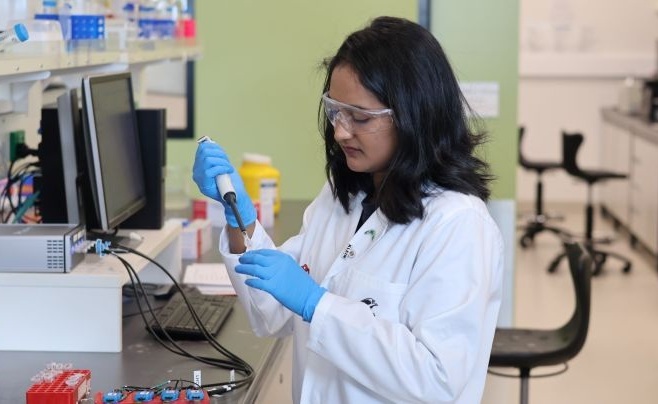
When a biological sample is added to the strip, the presence of a target microRNA alters the electrical signal produced by the sensor. The enzyme enhances this response, allowing the system to detect microRNAs at concentrations up to a trillion times lower than glucose levels. This sensitivity surpasses many existing molecular techniques and enables detection even when biomarkers are present in extremely small amounts.
The biosensor was validated using blood plasma samples, where it successfully detected microRNAs at concentrations up to 1,000 times lower than previously achievable with similar strip-based technologies. The results, published in Small, show that enzyme amplification enables robust and reproducible detection of microRNAs that are typically difficult to measure using standard PCR-based assays.
This technology opens the door to point-of-need diagnostics that do not rely on centralized laboratories or highly trained personnel. The researchers envision the test strip being incorporated into portable devices for routine disease screening, monitoring treatment response, and enabling earlier diagnosis of conditions such as cancer. Further development will focus on expanding the range of detectable microRNAs and translating the technology into clinical settings.
“It is exciting to be one step closer to disease diagnosis and monitoring that is truly point-of-need: affordable, convenient, accessible, and effective,” said Distinguished Professor Brian Abbey, Senior Researcher, La Trobe University, and co-developer of the biosensor.
Related Links:
La Trobe University