Neuron-Derived Extracellular Vesicles Could Improve Alzheimer’s Diagnosis
Posted on 31 Dec 2025
Alzheimer’s disease is becoming increasingly common as global populations age, yet effective treatments for advanced stages remain limited. Early detection is therefore critical, but current diagnostic approaches rely on cognitive testing, brain imaging, or cerebrospinal fluid analysis, which can be invasive, costly, or inconclusive during a patient’s lifetime. These limitations have driven the search for accessible biomarkers that reflect early brain changes. Recent research highlights that tiny neuron-derived particles found in bodily fluids may capture molecular signals of Alzheimer’s disease years before symptoms become severe.
Researchers from the National Institute of Mental Health and Neuro Sciences Hospital (NIMHANS, Karnataka, India) conducted a comprehensive review examining neuron-derived extracellular vesicles (NEVDs) as potential biomarkers for Alzheimer’s disease. These vesicles are released by neurons and other brain cells and can cross the blood–brain barrier, allowing them to be detected in blood, saliva, and other fluids. They carry proteins, lipids, and genetic material that reflect neuronal health. The review details how these vesicles can be isolated using neuronal markers and analyzed using imaging, particle tracking, and molecular profiling techniques.
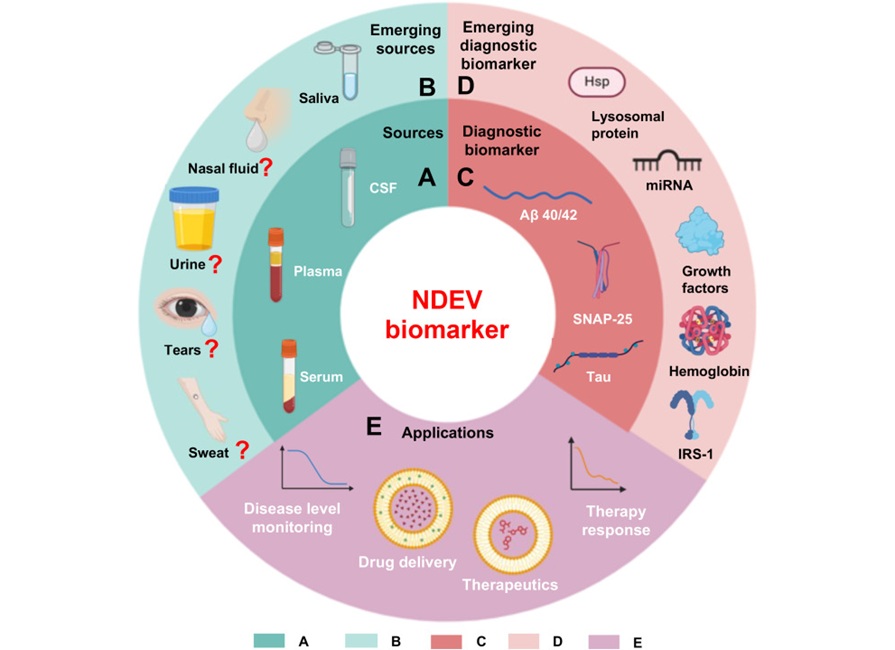
The review synthesizes evidence showing that neuron-derived vesicles contain hallmark Alzheimer’s-related proteins such as amyloid-β and phosphorylated tau, which can spread pathology between neurons. It also highlights additional biomarkers, including declining synaptic proteins, reduced stress-response factors, and elevated lysosomal proteins, indicating impaired cellular cleanup. Altered microRNAs and lipid profiles within these vesicles further reflect disease-related changes. The review, published in Brain Network Disorders, underscores growing consensus around their diagnostic potential.
In addition to diagnosis, neuron-derived extracellular vesicles could enable earlier disease staging, monitoring of progression, and assessment of treatment response through repeated, minimally invasive sampling. The review also outlines future possibilities of using these vesicles as therapeutic carriers to deliver drugs directly to the brain. Expanding research into noninvasive sample sources such as saliva or sweat may further simplify screening. Continued standardization and validation could move these biomarkers closer to routine clinical use.
Related Links:
NIMHANS






 Analyzer.jpg)