T-Cell Senescence Profiling May Predict CAR T Responses
Posted on 04 May 2026
Chimeric antigen receptor (CAR) T-cell therapy can deliver striking, durable remissions, yet many patients experience minimal or no benefit. The quality of patient-derived cytotoxic T lymphocytes used to manufacture these products may be a key determinant. Age-associated immune changes can further blunt proliferative capacity and effector function. New findings demonstrate that T-cell senescence signatures in starting material and finished products are linked to CAR T responses and failures.
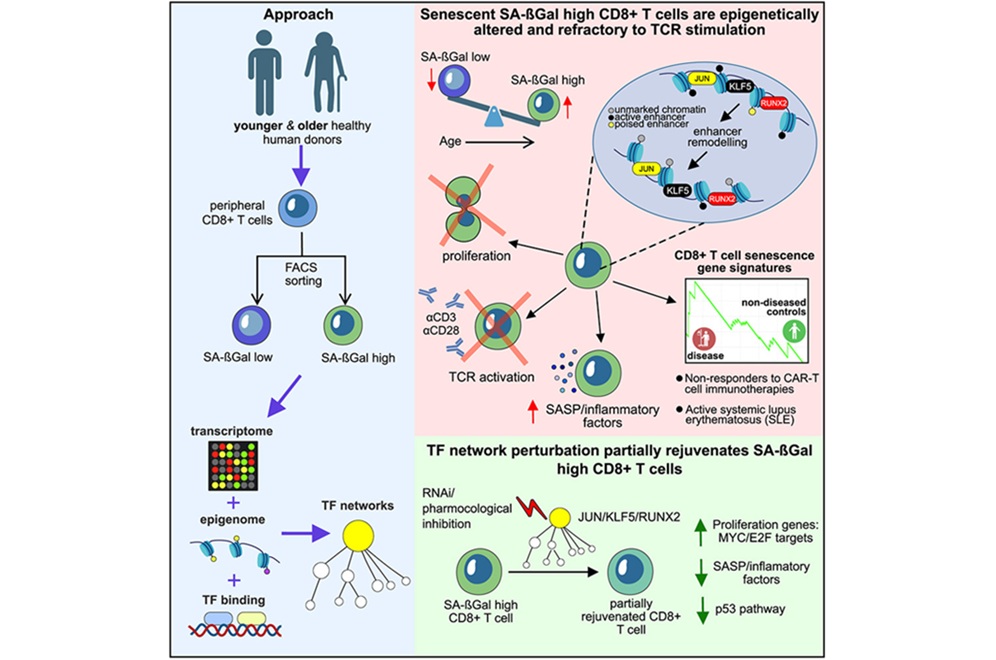
At Rutgers University (New Brunswick, NJ, USA), investigators identified cellular senescence in CD8+ T cells as a key determinant of CAR T-cell performance. Senescent T cells exist in a dysfunctional state, with limited capacity to proliferate in vitro, migrate to target tissues, or exert effective cytotoxic activity. These cells accumulate with age and can impair ex vivo expansion, tissue homing, and tumor-killing function, all of which are critical for therapeutic efficacy. In young adults, approximately 20%–30% of circulating CD8+ T cells were senescent, compared with 55%–80% in individuals aged 55 and older.
CAR T-cell therapy involves collecting a patient’s immune cells, genetically engineering them to recognize tumor antigens, expanding them in culture, and reinfusing them as living therapeutics. Because manufacturing depends on robust proliferation, a high burden of senescent T cells can impede production yields and functional potency. In culture, CD8+ T cells from donors with high senescence burdens expanded significantly less than cells from donors with lower burdens.
The researchers examined blood from younger and older donors, isolated CD8+ T cells, and used a fluorescent dye that marks senescent cells to sort populations. They profiled gene expression and chromatin architecture, concluding that senescence status—not chronological age—drove the dominant molecular differences. Using gene signatures derived from senescent cells, they conducted a retrospective analysis of published data from lymphoma patients treated with CAR T-cell therapy.
Patients whose starting T cells and finished products displayed strong senescence signatures were significantly more likely to experience treatment failure, whereas more youthful profiles were associated with response. The group identified three transcription factors at key control points; reducing their levels with chemical inhibitors and genetic tools partially dampened inflammatory gene expression, and lowering one factor partially restored activation-associated patterns, though recovery of cell division was modest. Senescence signatures were also enriched in patients with active lupus.
The work is published in Cell Reports. A planned collaboration with Rutgers Cancer Institute aims to test whether pre-manufacturing senescence profiling can predict responders, while the study also links senescent immune cells to age-related immune decline and chronic, low-grade inflammation. Rutgers Cancer Institute collaborates with RWJBarnabas Health.
“The senescence program is essentially precoded. It's not that older people develop some new dysfunctional program. The capacity is there from the beginning,” said Ricardo Iván Martínez-Zamudio, assistant professor at Rutgers Robert Wood Johnson Medical School and member of the Genomic Instability and Cancer Genetics Program and Cancer Pharmacology Program at Rutgers Cancer Institute.
Related Links
Rutgers Robert Wood Johnson Medical School
Rutgers Cancer Institute