Antibody Blood Test Identifies Active TB and Distinguishes Latent Infection
Posted on 03 Apr 2026
Active tuberculosis (TB) remains a leading cause of death and illness worldwide, yet distinguishing contagious disease from latent infection continues to challenge clinicians. Standard screening tools such as the Mantoux tuberculin skin test and interferon-gamma release assays cannot indicate infectiousness, and sputum-based diagnostics can miss extrapulmonary disease and are difficult for children to provide. These limitations slow clinical decision-making and contact tracing. New findings now demonstrate a blood test that identifies the active, infectious form of tuberculosis.
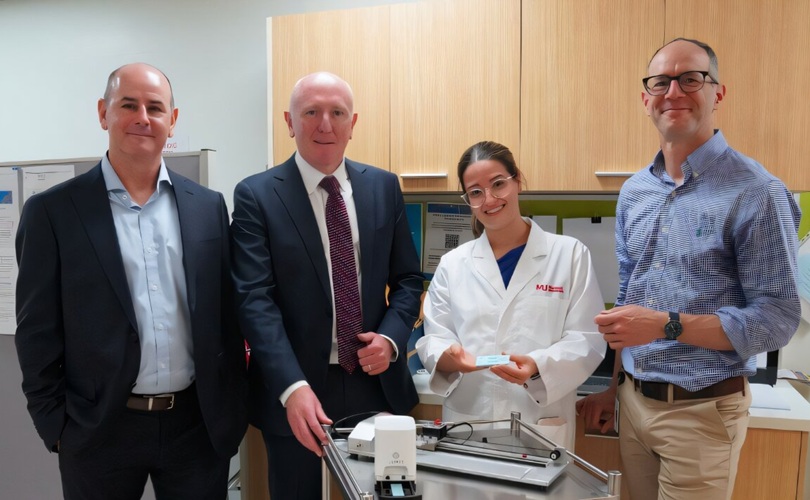
Researchers at UC Davis Health’s (Davis, CA, USA) Department of Pathology and Laboratory Medicine developed a TB blood test designed to detect active disease rather than prior exposure. The assay targets antibodies associated specifically with active Mycobacterium tuberculosis infection. By focusing on serologic markers of active disease, the method aims to complement existing screens that primarily reflect immune sensitization.
Operationally, the approach is similar to interferon-gamma release assays in that it measures host immune responses to TB proteins, but it differs by quantifying antibodies linked to active infection. This distinction addresses a central diagnostic gap: current skin and blood tests cannot differentiate active TB from latent infection, even though only active disease is transmissible. The developers state that faster identification of contagious cases can expedite treatment initiation and support infection-control measures.
The test was adapted with a medical technology company for routine clinical use and evaluated in India in a clinical trial conducted from 2019 to 2023 with more than 600 participants. Performance was reported across adult pulmonary TB as well as harder-to-detect presentations in children and extrapulmonary disease. According to the developers, data analysis and a clinical trial report have been submitted to the Indian Council of Medical Research for review.
Plans include potential expansion to neighboring countries following review in India. To support broader clinical deployment, a startup, AppGenex Diagnostics (Mountain View, CA, USA), was co-founded to pursue commercialization activities referenced by the team. The stated goal is to facilitate earlier recognition of contagious cases to help reduce transmission.
“The test performed surprisingly well. In addition to the expected good performance in adult pulmonary TB, which accounts for approximately 60% to 70% of TB infections, it was also able to identify harder-to-detect TB cases in children as well as TB that was in other organs in the body, not in the lungs,” said Imran H. Khan, professor in the UC Davis Department of Pathology and Laboratory Medicine.
“If we can stop the spread of TB by more easily identifying active infections, we can make a significant difference in decreasing global numbers of this devastating disease,” said Khan.
Related Links
UC Davis Health