Immune Enzyme Linked to Treatment-Resistant Inflammatory Bowel Disease
Posted on 22 May 2026
Inflammatory bowel disease (IBD) affects nearly 3 million people in the United States and its prevalence continues to rise. Medications that target tumor necrosis factor (TNF)-alpha are widely used, but they are not effective for every patient. Clarifying alternative immune pathways in the gut remains important to address therapy resistance. Researchers have now identified an immune-related enzyme that may be linked to treatment resistance and intestinal inflammation.
Mayo Clinic (Rochester, MN, USA) researchers identified ST8Sia6 as an immune‑modulating molecule in the gastrointestinal tract and characterized its role in maintaining homeostasis. The enzyme adds sugar molecules to cell surfaces, and in this context regulates the abundance of immune cells in the gut. When ST8Sia6 is absent or reduced, inflammatory immune cells increase, indicating loss of steady‑state control.
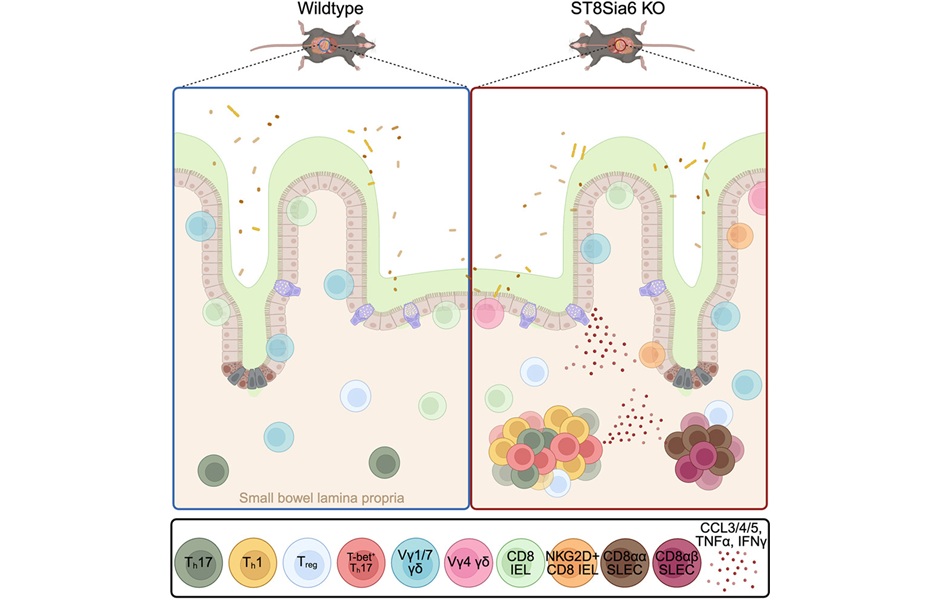
In preclinical models that lacked the ST8Sia6 gene, an abundance of immune cells gathered in the small intestine. Lower ST8Sia6 levels were associated with increased messenger molecules that prompt an immune response. Together, these attributes increased susceptibility to intestinal inflammation. Notably, the inflammation did not abate with medication that targets TNF‑alpha, suggesting this pathway may be distinct from current treatments. The team also noted an international database signal in which a single mutation in the ST8Sia6 gene appeared more frequently in people with Crohn’s disease.
The findings were published in Cell Reports on May 13, 2026, under the title “ST8Sia6-dependent glycosylation restrains gut inflammation and pathogenic Th1 and Th17 programs.” The work extends laboratory discoveries showing ST8Sia6 enables tumors to evade immune destruction and can be used to reduce the autoimmune attack on insulin‑producing beta cells. The study highlights another action of ST8Sia6 on the immune system and presents a potential new avenue relevant to IBD care. Further studies will be necessary to move the discovery toward the clinic.
“We found ST8Sia6 regulates the abundance of immune cells and keeps them in the steady state of homeostasis. When the molecule is not present or even is reduced, the presence of inflammatory immune cells increases dramatically,” said Virginia Shapiro, Ph.D., immunology researcher and principal investigator at Mayo Clinic.
“These findings mean researchers have an approach to better understand the source of TNF-resistant Crohn's disease, the pathways and molecules involved, and now may be able to develop additional ways to intervene to treat this disease,” said Sydney Crotts, a graduate student at Mayo Clinic Graduate School of Biomedical Sciences and first author of the study.
Related Links
Mayo Clinic