High-Resolution Cancer Virus Imaging Uncovers Potential Therapeutic Targets
Posted on 18 Feb 2026
Human T-cell leukemia virus (HTLV) is a retrovirus that causes adult T-cell leukemia/lymphoma, a serious blood cancer with no approved treatment. Although related to HIV, HTLV remains less understood at the molecular level, limiting the development of targeted therapies. Understanding how the virus assembles and spreads is critical for designing effective antiviral strategies. Now, new research provides high-resolution structural insights into the virus, revealing potential targets for future treatment development.
In a study led by the University of Minnesota School of Dentistry and Masonic Cancer Center (Minneapolis, MN, USA), in collaboration with the Institute for Molecular Virology (Minneapolis, MN, USA), researchers used cryogenic transmission electron microscopy and tomography to examine the HTLV capsid protein. Cryo-EM/ET enables detailed three-dimensional imaging by rapidly freezing viral samples at extremely low temperatures. The capsid protein, which forms the protective shell around the virus’s genetic material, plays a central role in viral assembly and represents a promising therapeutic target.
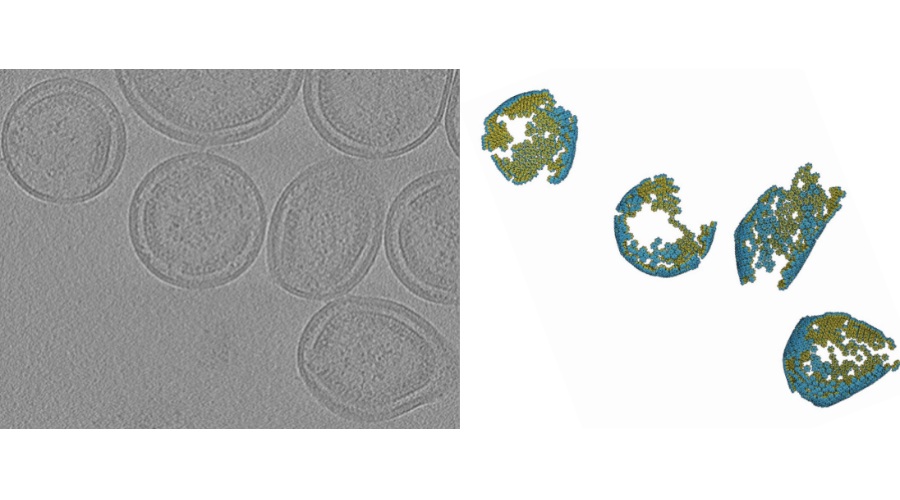
Using cryo-EM/ET, researchers successfully visualized the capsid protein’s structure and identified key features of viral assembly. For the first time, they measured the spatial relationship between the capsid protein and the virus’s outer layer, providing insight into capsid distribution within viral particles. The team also discovered that a negatively charged molecule known to assist HIV particle formation can interact with HTLV but is not required for its assembly. The findings, published in Nature Communications, highlight structural differences that could inform targeted drug design.
The detailed structural maps may support structure-based drug development strategies similar to those successfully used in HIV therapy. By clarifying how the capsid protein contributes to viral assembly and infectivity, the research offers a foundation for identifying compounds that disrupt this process. Future work will focus on understanding how HTLV spreads through direct cell-to-cell contact and determining how antiviral agents could interfere with capsid formation and viral replication.
“These high-resolution images will be useful for helping us understand why HTLV infectivity is strongly correlated with being associated with cells, where virus spread occurs through direct cell-to-cell contact,” said Louis Mansky, co-lead investigator of the study. “This remains a long-standing question in the field and could help guide the design of treatments for HTLV infection — a highly important task, knowing there are currently no such approved therapeutics.”
Related Links:
University of Minnesota School of Dentistry
Institute for Molecular Virology