Tryptophan Metabolism Is Dysregulated in Individuals with Fanconi Anemia
By LabMedica International staff writers
Posted on 20 Jan 2021
Fanconi anemia (FA) is a complex genetic disorder frequently associated with progressive marrow failure and a strong predisposition to early malignancies, particularly squamous cell carcinomas and hepatocellular carcinomas.Posted on 20 Jan 2021
Tryptophan is an essential amino acid necessary for protein synthesis. Tryptophan metabolism has been closely linked to alterations in the microbiome, and dysregulation of the tryptophan pathway has significant implications for host immune regulation, gut inflammation, and overall health.
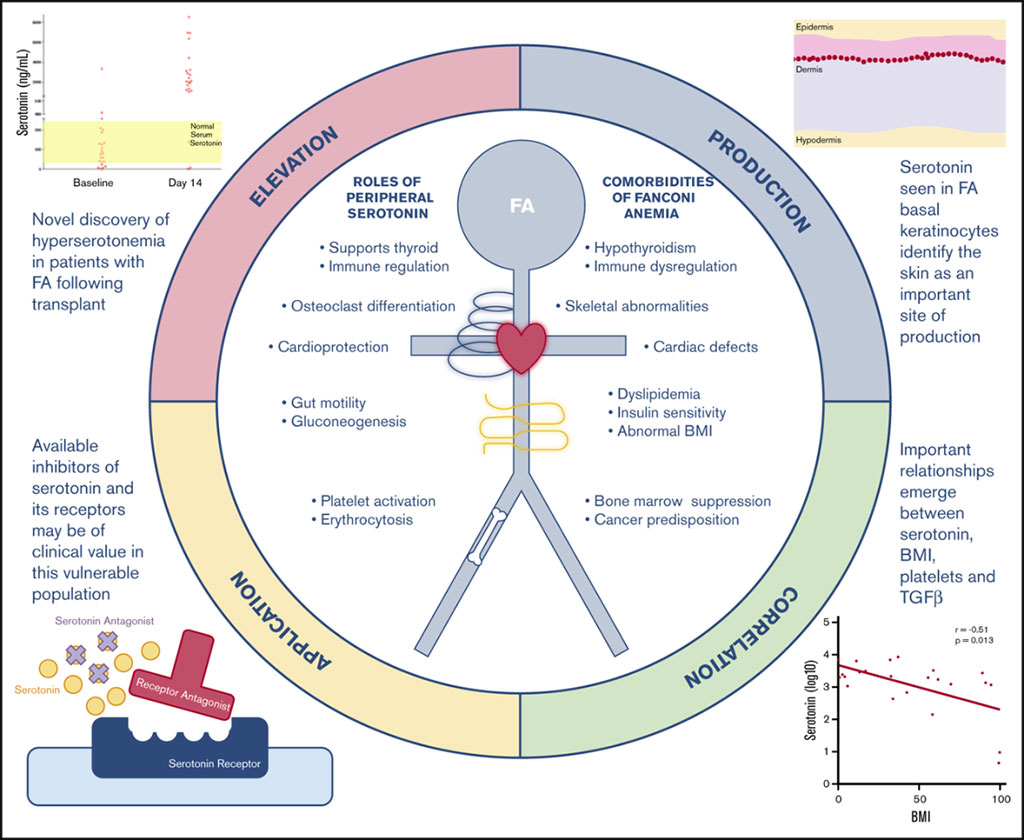
Image: Tryptophan metabolism is dysregulated in individuals with Fanconi anemia (Photo courtesy of Cincinnati Children’s Hospital Medical Center).
Hematologists at the Cincinnati Children’s Hospital Medical Center (Cincinnati, OH, USA) and their associates collected blood and stool samples from 23 patients with FA (52% females and age range 5-27 years) and 29 patients with other diagnoses (31% females and age range 1-18). The team studied tryptophan metabolism in FA by examining tryptophan and its metabolites before and during the stress of hematopoietic stem cell transplant (HSCT). Tryptophan can be converted to serotonin and kynurenine.
Plasma levels of tryptophan and metabolites were measured by using an enzyme-linked immunosorbent assay (ELISA): tryptophan (Abnova, Taipei, Taiwan); serotonin and melatonin (Enzo, Farmingdale, NY, USA); kynurenine (BlueGene Biotech, Shanghai, China); transforming growth factor β1 (TGF-β1, R&D Systems, Minneapolis, MN, USA).
Total RNA was isolated from peripheral blood mononuclear cells (PBMCs) and the expression of indoleamine 2,3-dioxygenase, tryptophan hydroxylase 1, and serotonin transporter were measured by RT-qPCR on an Applied Biosystems 7300 Real-Time PCR System (Thermo Fisher Scientific, Waltham, MA, USA). The team also performed immunochemistry using a Olympus BX53 microscope (Olympus America, Waltham, MA, USA). Nuclear magnetic resonance was also carried out on the plasma samples.
The scientists reported that that serotonin levels are markedly elevated 14 days after HSCT in individuals with FA, in contrast to individuals without FA. Kynurenine levels are significantly reduced in individuals with FA compared with individuals without FA, before and after HSCT. Most peripheral serotonin is made in the bowel. However, serotonin levels in stool decreased in individuals with FA after transplant, similar to individuals without FA. Instead, the team detected serotonin production in the skin in individuals with FA, whereas none was seen in individuals without FA.
Serotonin and TGF-β levels were closely correlated with platelet count before and after HSCT in persons without FA. In FA, neither baseline serotonin nor TGF-β correlated with baseline platelet count (host-derived platelets), only TGF-β correlated 14 days after transplant (blood bank-derived platelets).
The authors concluded that their findings suggest that serotonin inhibition as a new avenue to diminish a multitude of clinical risks and disease phenotypes in FA, which will now require detailed characterization of local and systemic serotonin metabolism. The study was published on January 7, 2021 in the journal Blood Advances.
Related Links:
Cincinnati Children’s Hospital Medical Center
Abnova
BlueGene Biotech
Thermo Fisher Scientific
Olympus America
Enzo
R&D Systems




Platinum Member

Automated Coagulation Analyzer
Hemolumi H6
New

Neurofilament Light Chain Assay
Lumipulse G NfL Blood

Gold Member

Platelet Function Analyzer
PL-12