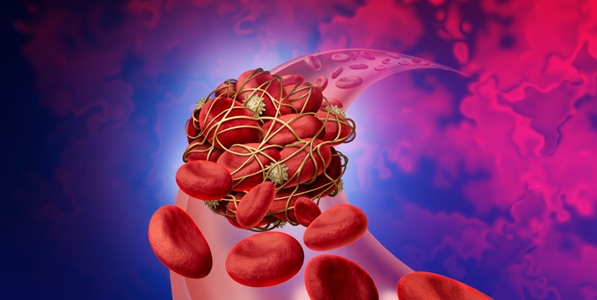
Paired Laboratory Tests Predict Vein Graft Occlusion
By LabMedica International staff writers
Posted on 15 Mar 2011
A blood test for platelet clumping velocity and another for a clumping chemical byproduct can predict whether coronary artery bypass grafting will be successful. Posted on 15 Mar 2011
The aggregation of platelets and their activation in plasma and blood can be assessed and correlated with the levels of a chemical found in the urine to saphenous vein graft (SVG) occlusion.
A team of cardiologists at Johns Hopkins School of Medicine, (Baltimore, MD, USA), examined platelet activation 3 days and 6 months after coronary artery bypass graft surgery in 229 subjects receiving aspirin monotherapy.
The cardiologists used a platelet function analyzer (PFA), and measured closure time (CT) using collagen/epinephrine agonist cartridge and collagen/adenosine diphosphate (CADP) agonist cartridge (Accumetrics, Inc., San Diego, CA, USA). Thromboxane A2 (TXA2) generation was quantified by measuring the concentration of its stable metabolite 11-dehydro-thromboxane B2 (UTXB2) in urine by enzyme-linked immunosorbent assay (ELISA) and expressed as a ratio to urinary creatinine.
The results from the Platelet Function Analyzer-100 (PFA-100; Siemens Healthcare Diagnostics, Newark, DE, USA), showed that those who ranked in the quarter with the slowest blood-clotting times had an 11% vein graft failure rate, while those whose blood clotted fastest had a 28% risk. Tests for UTXB, a highly reactive chemical whose action is normally suppressed by aspirin, were equally linked to vein graft failure. Study participants in the quartile with the lowest amounts of UTXB had a 12% likelihood of one or more veins occluding, while in the quartile with the highest amounts of UTXB, the rate was 29%. When results of both tests were combined, patients with the "most-sticky" platelets and highest UTXB levels had a nearly sevenfold increased risk of vein graft failure, compared to those who had the "least-sticky" platelets and lowest UTXB levels.
Jeffrey Rade, MD, the senior investigator, said, "These two tests offer physicians new tools for early detection of bypass patients at greatest risk of vein graft failure, giving them advance warning and, potentially, buying time to try drug or surgical therapies that might either slow down or reverse the narrowing and buildup of plaque and dead cells inside the grafted vein".
The authors concluded that aspirin-insensitive thromboxane generation measured by UTXB2 and shear-dependent platelet hyper-reactivity measured by Platelet Function Analyzer-100 CADP CT are novel independent risk factors for early SVG thrombosis after coronary artery bypass graft surgery. The study was published March 1, 2011, in the Journal of the American College of Cardiology.
Related Links:
Johns Hopkins School of Medicine
Accumetrics, Inc.
Siemens Healthcare Diagnostics




Platinum Member

Automated Coagulation Analyzer
Hemolumi H6

LAIR2 Antibody Pair Set
LAIR2 Antibody Pair [Biotin]
Gold Member

Quantitative POC Immunoassay Analyzer
EASY READER+