High Risk Cancer Gene Discovered
By LabMedica International staff writers
Posted on 31 Jan 2012
A gene that plays a key role in the development of esophageal cancer has been discovered and characterized. Posted on 31 Jan 2012
The gene is thought to play a role in the more common, noninherited form of esophageal cancer, revealing a new target for treating this aggressive type of malignancy.
A study led by scientists at Queen Mary's School of Medicine and Dentistry (London, UK) investigated families who suffer a rare inherited condition making them highly susceptible to the disease and found that a fault in a single gene was responsible. They concentrated on three families with a hereditary condition called tylosis with esophageal cancer. This condition affects the skin and mouth and sufferers have a 95% chance of developing esophageal cancer by the age of 65.
The study revealed that all three families carried a faulty version of a gene called the rhomboid family member 2 (RHBDF2). This gene plays an important role in how cells that line the esophagus, and cells in the skin, respond to injury. When the gene is functioning normally, it ensures that cells grow and divide in a controlled fashion to help heal a wound. However, in tylosis patients' cells, and in cells from esophageal cancers, the gene malfunctions. This allows cells to divide and grow uncontrollably, causing cancer.
David Kelsell, PhD, a professor at Queen Mary, said "In studying this relatively rare condition, we have made an important discovery about a cancer that is all too common. Finding a genetic cause for this aggressive cancer, and understanding what that gene is doing, is an enormous step forward. By analyzing the complex biology which causes a particular type of cancer we begin to understand which treatments might be effective and also which treatments are unlikely to help." Esophageal cancer or cancer of the gullet affects more than 8,000 people each year in the UK and rates are rising. It is more common in the UK than anywhere else in Europe.
Related Links:
Queen Mary's School of Medicine and Dentistry



Gold Member

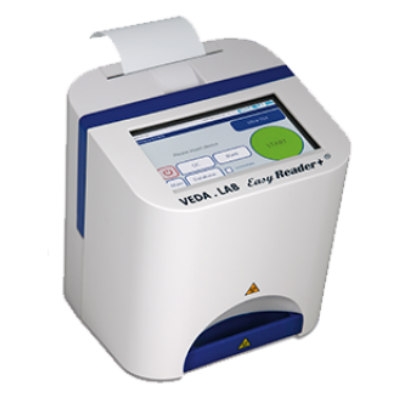
Quantitative POC Immunoassay Analyzer
EASY READER+


Japanese Encephalitis Test
Japanese Encephalitis Virus Real Time PCR Kit

CMV CLIA Diagnostic
CLIA CMV IgA Screen Group