CE-Marked Blood Biomarker Test Advances Automated Alzheimer’s Diagnostics
Posted on 13 May 2026
Specialized care settings frequently evaluate patients aged 50 years and older who present with signs and symptoms of cognitive decline to determine whether amyloid pathology linked to Alzheimer’s disease is present. Adjunctive laboratory biomarkers measured in blood are used alongside other evaluations in this pathway. A newly launched test now offers fully automated, quantitative measurement of plasma phosphorylated tau to aid identification of amyloid pathology following certification for use in Europe.
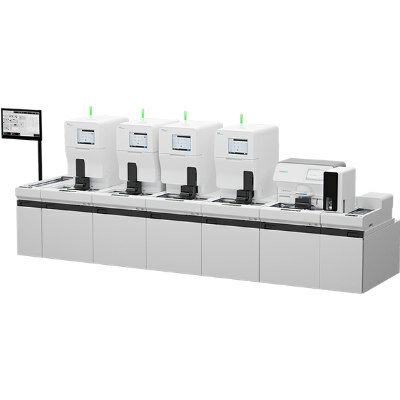
Fujirebio Europe N.V. has obtained a CE certificate under Regulation (EU) 2017/746 on in vitro diagnostic medical devices for the Lumipulse G pTau 217 Plasma assay. The chemiluminescent enzyme immunoassay (CLEIA) runs on the LUMIPULSE G platform and quantitatively measures tau phosphorylated at threonine 217 (pTau 217) in human K2EDTA plasma. The assay is fully automated on the platform and is designed for professional use.
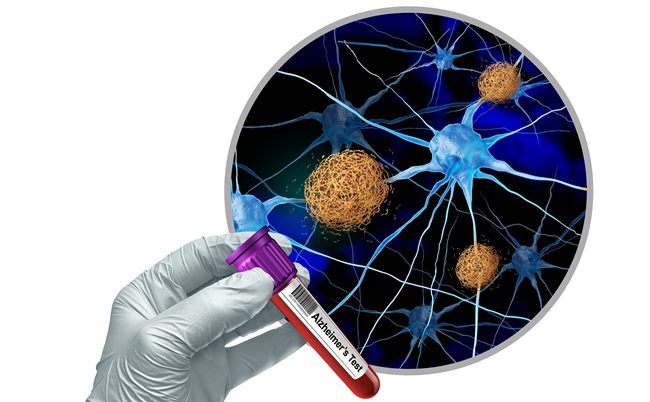
The Lumipulse G pTau 217 Plasma assay is intended to aid healthcare providers in identifying patients with amyloid pathology associated with Alzheimer’s disease. It is indicated for patients aged 50 years and over who present with signs and symptoms of cognitive decline in a specialized care setting. The assay is to be used as an adjunct to other diagnostic evaluations.
The CE marking enables use of this assay within the European Union framework for in vitro diagnostics. The addition of pTau 217 complements blood-based approaches to support clinical decision-making in neurology workflows. The fully automated format is designed to provide scalability on the LUMIPULSE G platform.
“With Lumipulse G NfL Blood and Lumipulse G pTau 217 Plasma now CE‑marked on our LUMIPULSE G platform, we are advancing a new era of neurology diagnostics—one where blood‑based biomarkers enable earlier, broader, and more accessible insights into Alzheimer’s disease and neurodegeneration," said Christiaan De Wilde, CEO at Fujirebio Europe N.V.
“By delivering fully automated and scalable solutions, we are helping clinicians move decisively toward more timely and informed decision‑making. This milestone underscores our long‑term vision to reimagine the diagnostic pathway and to fundamentally improve patient care across Europe through innovation, precision, and partnership,” said De Wilde.