Noninvasive Urine Test May Support Earlier Diagnosis of Psychiatric Disorders
Posted on 13 May 2026
Delays in diagnosing serious psychiatric conditions can leave patients without timely support and complicate treatment planning. For bipolar disorder, average time to diagnosis can exceed nine years, and assessments for attention-deficit/hyperactivity disorder (ADHD) and anorexia in young people often face lengthy waits. Objective, noninvasive biomarkers remain scarce in routine mental health assessment. Researchers now report urinary metabolite signatures that may enable earlier identification of these conditions.
At the University of Cambridge, investigators from the Department of Chemical Engineering and Biotechnology and the Yusuf Hamied Department of Chemistry identified 67 urinary metabolite markers associated with multiple psychiatric conditions. Twenty-one of these markers were unique to a single disorder. The findings point to the feasibility of a quick, noninvasive urine-based approach to support earlier clinical decision-making.
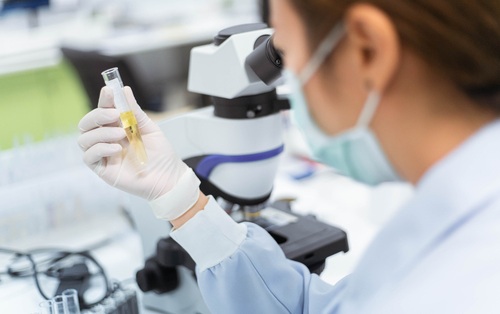
The team applied a Mendelian randomization framework, a genetic method that mimics a genomic clinical trial, to test causal links between psychiatric diagnoses and urine chemistry. By leveraging existing datasets, the approach circumvents the time and cost of conventional laboratory biomarker screening. The analysis highlighted distinct metabolite–disorder relationships that could be translated into targeted diagnostic panels pending clinical validation.
Examples cited include altered levels of vitamin B6 (pyridoxal) in anorexia, N,N-dimethylglycine in ADHD, and condition-specific shifts in creatine and tyrosine linked to bipolar disorder and schizophrenia, respectively. The authors emphasize that the candidate markers require testing in real-world clinical trials before integration into care pathways. The study was in BMC Psychiatry on May 7.
The work builds on prior outputs from the Cambridge groups, including earlier findings published in Scientific Reports last year, as well as department efforts exploring urine-based detection strategies in other diseases. Collectively, the cross-departmental program underscores the value of integrating chemistry, biotechnology, and data science to refine objective measures for psychiatric assessment.
“A urine test is quick, non-invasive and routine procedure in health care. If these findings hold up in clinical trials, we could offer GPs and mental health teams a practical tool to support earlier diagnosis—and reduce pressure on overstretched NHS services,” said Sabine Bahn, corresponding author and head of the Cambridge Center for Neuropsychiatric Research.
CEB University of Cambridge
Yusuf Hamied Department of Chemistry