Blood Test Stratifies Prostate and Breast Cancer Risk Years Before Diagnosis
Posted on 24 Sep 2026
Cancer is the second leading cause of death globally, and late diagnosis contributes substantially to mortality. Routine screening is available for only a few cancer types, while other early detection approaches vary in effectiveness. Blood-based tests may help identify early biological changes, but detecting cancer before clinical diagnosis remains difficult. A new study shows that DNA changes in stored blood samples distinguished some people who later developed prostate or breast cancer from those who remained cancer-free.
University of Oxford researchers, working with the University of Toronto, examined DNA methylation patterns as potential early signals of cancer development. Methylation involves chemical tags that regulate gene activity, including activity linked to cell growth, immune function, and inflammation. The work is part of a broader research program using cell-free methylated DNA immunoprecipitation sequencing to profile blood samples.
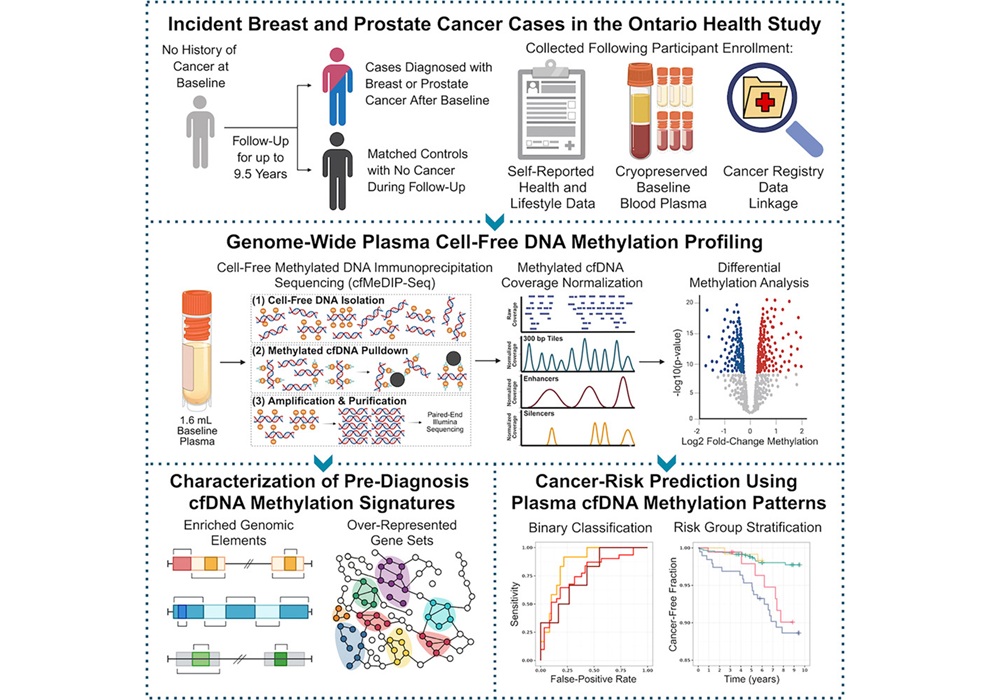
The researchers analyzed stored blood samples from 491 Ontario Health Study participants who were cancer-free when samples were collected. Some participants subsequently developed breast or prostate cancer, while others remained cancer-free. Samples were collected as much as nine years before a cancer diagnosis, allowing the team to examine changes that preceded clinical detection.
The strongest early signal was associated with prostate cancer. Methylation changes in DNA regions called silencers identified people at higher risk five to eight years before diagnosis. Breast cancer signals were less accurate overall, but changes in regions called enhancers distinguished women at higher and lower risk 1.5 to eight years before diagnosis. The findings were published in Cell Genomics on September 21, 2026.
The authors suggest that this approach could eventually help identify people who need more proactive prostate cancer screening while reducing unnecessary testing among those at lower risk. They consider the breast cancer results unlikely to support population-wide screening on their own, but potentially useful for complementary risk assessment. The findings support further investigation of minimally invasive blood testing alongside existing screening approaches.
“Together, these studies chart a progression from detecting established tumors to identifying the earliest systemic signals of cancer development—supporting a future in which minimally invasive blood tests could complement existing screening and help identify people who would benefit most from closer surveillance,” said Philip Awadalla, professor of molecular genetics at Oxford Population Health and the University of Oxford's Big Data Institute
Related Links
Oxford Population Health
Big Data Institute