A Leishmanial Protease Freezes Macrophage Response and Promotes Infection
By LabMedica International staff writers
Posted on 19 Oct 2009
A recent paper described a molecular mechanism that may explain how the Leishmania parasite manages to survive and thrive in macrophages, the immune cells that normally engulf and digest invading pathogens.Posted on 19 Oct 2009
The World Health Organization (WHO) estimates that 12 million people are infected with either the cutaneous, mucocutaneous, or visceral form of leishmaniasis, and that there are between 1.5 and two million new cases each year. Kala azar, the visceral form of the disease, kills more than 50,000 thousand people worldwide annually. A neglected disease, the treatment for kala azar was developed in the 1930s and requires a long, painful course of intra-muscular injections. The treatment is also prohibitively expensive for many of those who have the disease.
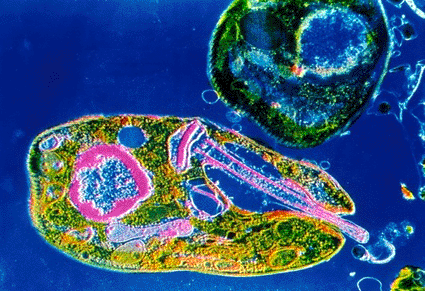
Image: False-color transmission electron micrograph (TEM) of Leishmania, a parasitic flagellate protozoan that causes the disease leishmaniasis in humans (Photo courtesy of CNRI / SPL).
Investigators at McGill University (Montreal, Canada) are searching for molecular biological clues that will lead to better methods of treatment for leishmaniasis. They reported in the September 29, 2009, issue of the journal Science Signaling that infection of macrophages with Leishmania alters the activity of multiple protein tyrosine phosphatases (PTPs) through cleavage mediated by the parasite protein GP63.
The activated PTPs inhibited macrophage inflammatory immune responses through dephosphorylation of Janus kinases. In addition to the PTP SHP-1, previously reported to be activated in response to Leishmania infection, the current study showed that the PTPs TCPTP and PTP1B were also activated, and that PTP1B served a key role in the initial stages of disease progression in mice.
"Our results demonstrate the mechanism through which the GP63 protease alters the function of the macrophages by activating its own negative regulatory mechanisms," explained senior author Dr. Martin Olivier, professor of experimental medicine, microbiology, and immunology at McGill University. "The infected cells act "frozen,” which hinders the body's innate inflammatory immune response and leads to infection."
"Our research indicates that the GP63 protease is the target of choice for innovative future treatments, in terms of prevention," said Dr. Olivier. "Better control over the activation of these host molecules could be one promising approach to treating leishmania as well as other infectious diseases that use similar infection strategies."
Related Links:
McGill University




Platinum Member

Automated Coagulation Analyzer
Hemolumi H6

Gold Member

Electrolyte Analyzer
CBS-4000 (CBS-400)

CMV CLIA Diagnostic
CLIA CMV IgA Screen Group

Automatic CLIA Analyzer
Shine i6000