AI Pathology Test Receives FDA Breakthrough for Bladder Cancer Risk Stratification
Posted on 18 May 2026
Non–muscle invasive bladder cancer has highly variable outcomes, complicating surveillance and treatment planning. Risk assessment typically relies on stage, grade, and tumor size, leaving uncertainty when clinicians choose between conservative management and more aggressive intervention. More precise prognostic tools are needed to align treatment intensity with each patient’s biological risk. A new artificial intelligence (AI)–enabled pathology system has received U.S. Food and Drug Administration (FDA) Breakthrough Device Designation to support bladder cancer risk stratification.
Valar Labs’ (Palo Alto, CA, USA) Vesta Bladder Risk Stratify Dx has been granted Breakthrough Device Designation by the FDA. It is positioned as the first AI-powered digital pathology prognostic test in bladder cancer to achieve Breakthrough status. The designation recognizes the product’s potential to address a critical unmet need in bladder cancer prognosis.

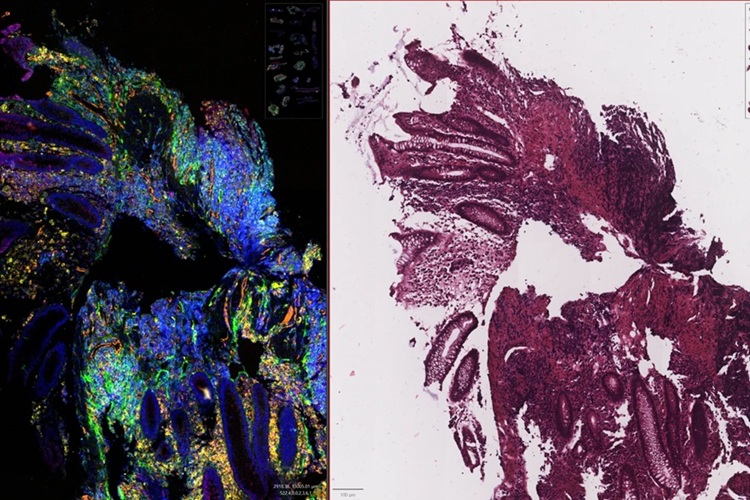
The system applies proprietary artificial intelligence foundation models to standard hematoxylin and eosin (H&E)–stained pathology slides generated during routine clinical care. It analyzes these slides to generate a prognosis and patient risk assessment. By leveraging routine slide preparations, it delivers an individualized risk readout based on image-derived signals.
Under the FDA’s Breakthrough Device Program, devices intended to provide more effective diagnosis or treatment of life‑threatening or irreversibly debilitating conditions and that address unmet needs receive prioritized interaction and review. Such engagement may expedite the path to FDA clearance and patient access.
The underlying technology also powers a portfolio of AI-driven lab-developed tests spanning bladder, prostate, and pancreatic cancer that are orderable from a CLIA-certified and CAP-accredited laboratory. The Vesta platform is designed to support clinicians at key decision points across the cancer care continuum—from initial risk assessment through treatment selection—by extracting predictive signals from pathology images that are not visible to the human eye. These capabilities are positioned to inform decision-making across multiple tumor types.
“Vesta Bladder has been a breakthrough in biomarker driven oncology by serving a population of patients that previously had limited access to precision medicine,” said Anirudh Joshi, co-founder and CEO of Valar Labs.
“For decades, urologists have managed bladder cancer with prognostic tools that leave too many patients in the gray zone — Vesta Bladder Risk Stratify Dx gives clinicians the resolution they need to match treatment intensity to each patient's true biological risk,” said Trevor Royce, MD, Chief Medical Officer of Valar Labs.
Related Links
Valar Labs