


WHO Survey Reveals Gaps in Antimicrobial Resistance Testing and Response
Posted on 19 Nov 2026
Antimicrobial resistance (AMR) remains a major challenge for health systems, limiting effective treatment options for drug-resistant infections. These infections caused more than 1 million deaths and contributed to nearly 5 million deaths in 2021. Clinical laboratories play a central role in guiding antimicrobial and antifungal therapy through resistance testing. However, new survey data show that although many countries have AMR plans, implementation, financing, surveillance, and testing capacity remain limited.
The World Health Organization (WHO) released findings from the Tracking AMR Self-assessment Survey (TRaCSS), conducted annually with other international agencies involved in responding to drug-resistant infections. The results show that 179 countries, representing 89% of WHO member states, have developed national antimicrobial resistance action plans, up from 79 countries, or 41%, in 2017. However, only 42 countries, or 22%, have translated their plans into funded programs.
This gap between planning and implementation also extends to infection prevention, surveillance, and laboratory testing. The number of countries with national infection prevention and control programs rose from 90, or 46%, in 2017 to 128, or 66%, in 2024. Yet only 36% of those countries have implemented their programs, below the United Nations target of 90% by 2030. Fewer than 60% of countries have implemented national surveillance systems for antimicrobial use or resistance, and fewer than one in five link data from the two systems.
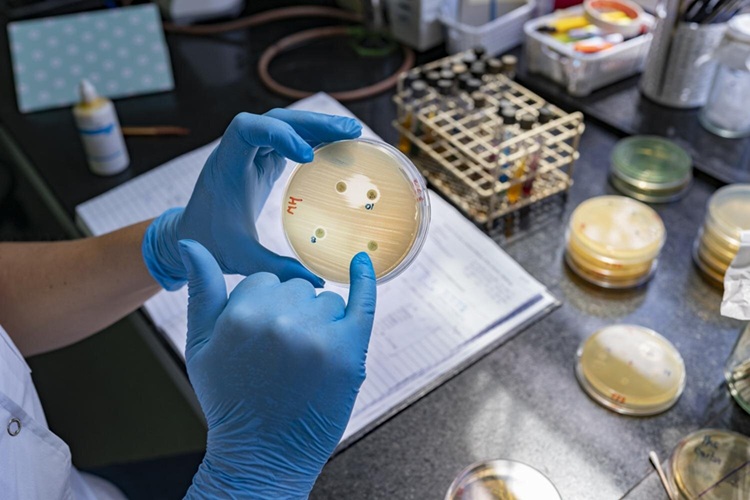
Limited laboratory capacity further constrains the response. Only 66 countries, or 36%, reported having a national reference laboratory capable of testing resistance in selected bacteria and fungi, compared with a 2030 target of 80%. WHO emphasized that this capability is critical to ensuring patients receive appropriate antibiotic or antifungal treatment.
To help countries strengthen testing capacity, WHO also released two guidance documents. The first identifies essential diagnostic tests that should be available at different healthcare levels to support the diagnosis, treatment, and surveillance of bacterial infections and antimicrobial resistance. The second provides clinical laboratories with standard operating procedures for diagnosing bacterial and fungal infections and performing antimicrobial susceptibility testing.
WHO also released two documents intended to help countries address testing gaps. One lists essential diagnostic tests that should be available at different healthcare levels to support diagnosis, treatment, and surveillance of bacterial infections and antimicrobial resistance. The other provides clinical laboratories with standard operating procedures for diagnosing bacterial and fungal infections and performing antimicrobial susceptibility testing.
“The choices we make now will determine whether future generations inherit a world where common infections are treatable,” said Jean Pierre Nyemazi, MD, acting director of the WHO's AMR Department.
“Without testing, clinicians must treat without knowing the cause of infection, or which antibiotic will work. Without testing, we cannot see where resistance is emerging,” said Silvia Bertagnolio, MD, head of the WHO's AMR Surveillance, Evidence and Laboratory Strengthening Unit.
Related Links
World Health Organization