Urine-Based Multi-Cancer Screening Test Receives FDA Breakthrough Device Designation
Posted on 21 Apr 2026
Early detection across multiple cancers remains a major unmet need in population screening. Non-invasive approaches that can be delivered at scale may broaden access and shift diagnoses to earlier stages. A new urine-based multi-cancer early detection test has received U.S. Food and Drug Administration (FDA) Breakthrough Device Designation, recognizing its potential to enable earlier detection from a single urine sample.
TOBY, Inc.’s urine-based Multi-Cancer Early Detection (MCED) test is the first urine-based MCED technology to receive FDA Breakthrough Device Designation. The platform is designed to detect more than ten cancers from a single non-invasive sample, representing over 60% of global cancer cases. The designation builds on the U.S. Food and Drug Administration’s previous Breakthrough Device Designation granted to the company for its urine-based bladder cancer test. Founded in 2023, the company develops non-invasive cancer screening technologies.
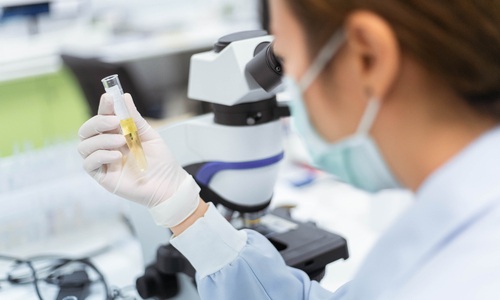
The MCED platform analyzes volatile organic compounds (VOCs) in urine using spectroscopy and machine learning to identify cancer‑associated molecular patterns. The test requires only one urine sample and offers an alternative to blood-based screening approaches. The technology is described as supporting scalable population screening for multi-cancer detection.
Within the U.S. FDA program, Breakthrough Device Designation is intended to expedite development and review of medical devices that may provide more effective diagnosis or treatment of serious or life‑threatening diseases. The designation supports continued progress toward expanded clinical studies, future regulatory submissions, and reimbursement. The company indicates it will work closely with the agency to establish the evidence required for broad clinical adoption.
"This Breakthrough Device Designation marks a defining moment for TOBY and for the future of cancer screening. It reinforces our conviction that urine-based, non-invasive detection can fundamentally change how and when cancer is identified, not just by improving the patient experience, but by enabling screening to happen earlier and at scale," said Matthew Laskowski, Chief Executive Officer of TOBY.
"We believe the next generation of cancer detection will be built around approaches that are simple, accessible, and designed for broad population use, rather than constrained by the limitations of existing modalities, and our platform is engineered with that vision in mind, supporting multi-cancer detection from a single sample. Working closely with the FDA, we are now positioned to accelerate clinical validation and generate the evidence required to bring a more scalable, widely accessible approach to early cancer detection into routine care."
Related Links
TOBY