Updated Ferritin Thresholds Improve Detection of Iron Deficiency
Posted on 18 Sep 2026
Iron deficiency is one of the most common health conditions worldwide, yet its nonspecific symptoms can delay diagnosis for months. Variation in testing practices and ferritin thresholds may contribute to missed cases among children, menstruating and pregnant individuals, and patients with inflammatory conditions. Earlier detection is important because untreated iron deficiency can progress to iron deficiency anemia and related complications. New evidence-based guidance now aims to standardize laboratory thresholds and improve case finding across key populations.
The American Society of Hematology (ASH) has issued evidence-based clinical practice guidelines that raise recommended serum ferritin cutoffs used to diagnose iron deficiency. The guidance is designed to improve recognition across adults, young children, menstruating and pregnant individuals, and people with inflammation, addressing long-standing variability in testing practices and thresholds. By defining higher decision limits for ferritin and specifying alternative criteria in inflammatory states, the document aims to make laboratory interpretation more consistent and clinically actionable.
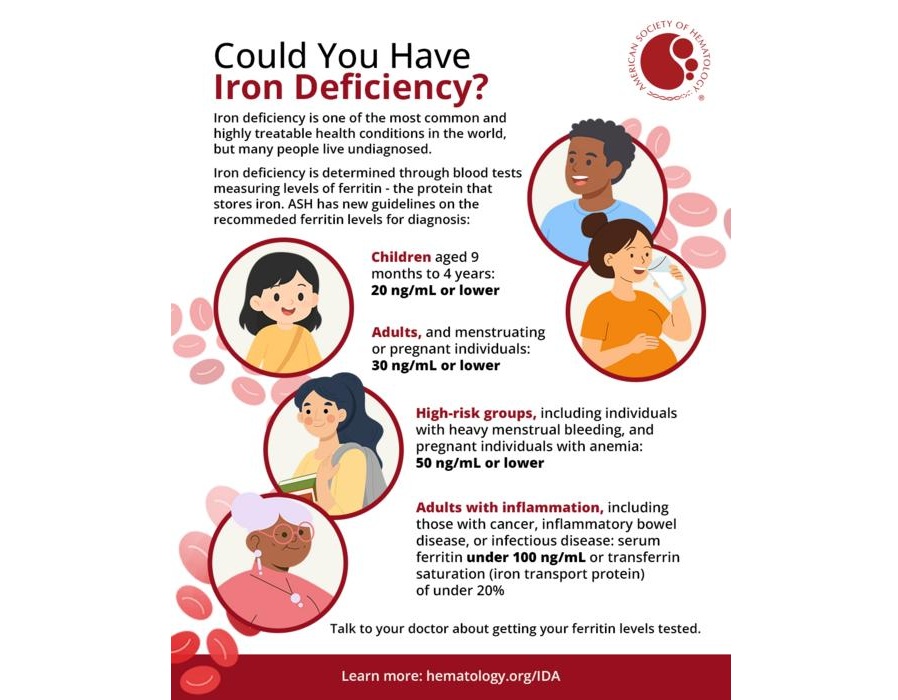
Under the new recommendations, a ferritin concentration of 20 ng/mL or lower indicates iron deficiency in children aged 9 months to 4 years. For adults and for menstruating or pregnant individuals, the diagnostic threshold is 30 ng/mL or lower, while high-risk groups—including those with heavy menstrual bleeding and pregnant individuals with anemia—should be assessed using a 50 ng/mL or lower cutoff. In adults with inflammation, iron deficiency is indicated by a ferritin level under 100 ng/mL or a transferrin saturation below 20%, acknowledging that ferritin can be elevated in inflammatory conditions and may mask depleted iron stores.
ASH notes that iron deficiency affects an estimated one in three people, including about 10 million adults in the United States and 2 billion individuals worldwide, yet many cases remain undiagnosed. The society highlights evidence that up to 70% of cases may be missed among high‑risk populations due to limited screening and variable reference ranges. With higher ferritin cutoffs applied across populations, some individuals previously considered not to have iron deficiency based on older thresholds may now meet diagnostic criteria, and patients are encouraged to discuss testing with clinicians.
“Iron deficiency and iron deficiency anemia are among the most common yet neglected medical conditions globally. Many patients live with symptoms such as fatigue, weakness, dizziness or difficulty concentrating for months or even years before iron deficiency is recognized. These guidelines are an important step toward closing that gap by helping clinicians diagnose iron deficiency earlier and more accurately, so more patients can receive the care they need,” said Robert S. Negrin, M.D., ASH President.
“These updated ferritin thresholds provide clear guidance in an area where consensus has been lacking. We hope these recommendations empower patients to better understand and ask for the testing they need and that health systems adopt these thresholds for diagnosis,” stated Jacquelyn M. Powers, M.D., M.S., guideline chair and section chief of hematology at Texas Children’s Hospital and associate professor in the department of pediatrics at Baylor College of Medicine.
Related Links
American Society of Hematology