


Two-Step Blood Test Improves Specificity for Alzheimer’s Diagnosis
Posted on 28 Oct 2026
Early Alzheimer’s disease can be difficult to identify before more severe cognitive symptoms emerge. Blood tests measuring phosphorylated tau protein p-tau217 may help detect disease-related changes, but elevated levels can also occur in other neurological or muscle-related conditions, increasing the risk of false-positive results. To improve diagnostic reliability in these uncertain cases, researchers now report a two-step blood testing approach for Alzheimer’s disease evaluation.
Researchers at University Medicine Halle developed the two-step method to refine established p-tau217 blood testing. The approach first uses a specific antibody to isolate brain-derived tau from a blood sample before measuring p-tau217. This additional step is designed to distinguish smaller tau forms primarily found in the brain from larger “big tau” forms present in peripheral nerves, muscles, and potentially other tissues.
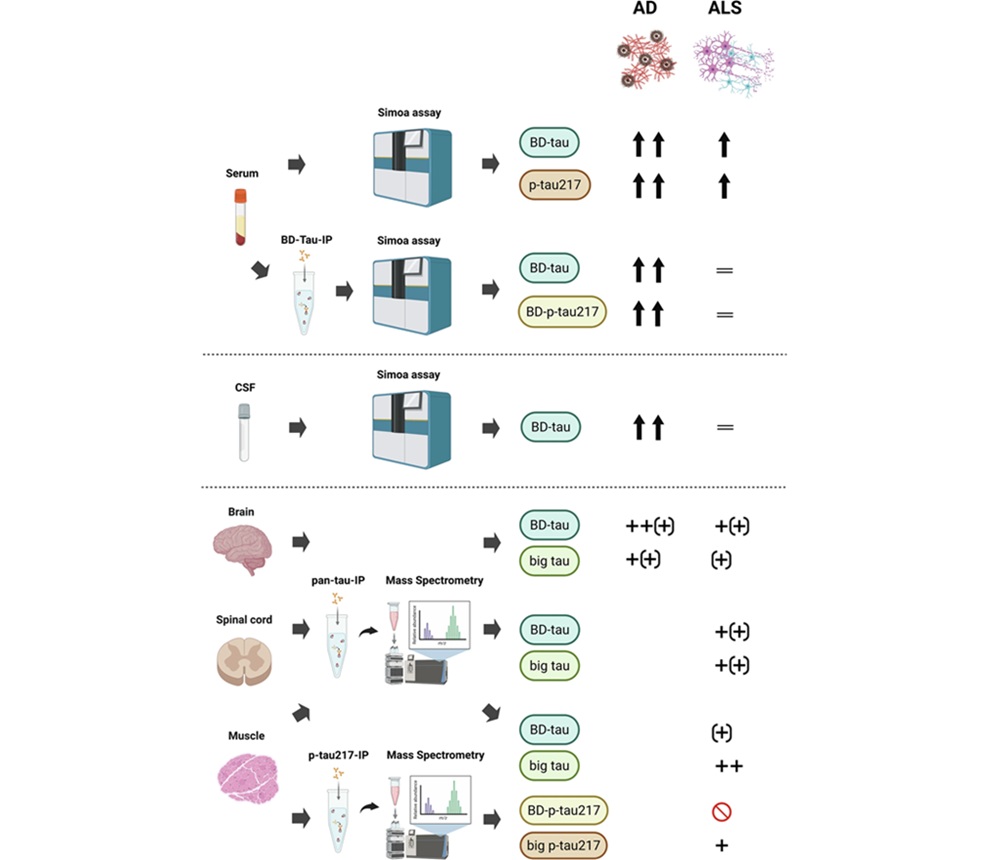
The team compared the conventional blood test with the new method using samples from 315 participants. The cohort included 101 people with Alzheimer’s disease, 139 with amyotrophic lateral sclerosis, and 75 control participants. Samples were collected at neurological centers in Halle and Mannheim, Germany, and Milan, Italy.
The conventional assay showed elevated p-tau217 levels in both the Alzheimer’s disease and amyotrophic lateral sclerosis groups. After the antibody-based isolation step, however, p-tau217 remained elevated in people with Alzheimer’s disease but not in those with amyotrophic lateral sclerosis or control participants. Additional mass spectrometry analyses of brain, spinal cord, and muscle tissue found that brain-derived p-tau217 was virtually absent from muscle tissue.
The findings were published in Nature Communications on October 22, 2026. The researchers propose that, following further standardization and validation in larger independent cohorts, the method could be used alongside existing blood tests to improve Alzheimer’s disease assessment. The study also suggests that future blood tests targeting larger tau forms could help evaluate muscle and nerve damage in amyotrophic lateral sclerosis.
“Conventional blood tests cannot reliably distinguish between these different forms of tau. Consequently, elevated p-tau217 levels may incorrectly indicate Alzheimer's disease when they are actually associated with a muscle or nerve disorder,” said professor Markus Otto, director of the Department of Neurology at University Medicine Halle and senior author of the study.
"A conventional p-tau217 test could provide a first indication of Alzheimer's disease. If the result does not fit the clinical picture, or if a muscle or nerve disorder might be influencing the measurement, the two-step method can help clarify the result. This would reduce false-positive results and help identify more reliably the patients who are eligible for the new Alzheimer's therapies," said Dr. Samir Abu Rumeileh, consultant neurologist at the Department of Neurology at University Medicine Halle and first author of the study.
Related Links
University Medicine Halle