Tumor Blood Vessel Features May Help Predict Colorectal Cancer Survival
Posted on 22 Sep 2026
Colorectal cancer outcomes vary widely, and tumor biology remains a key determinant of prognosis. Because neoplasms depend on a vascular supply, differences in intratumoral vessels may influence survival. Yet the composition and structure of these vessels have been difficult to characterize at scale. New findings now show that these vascular differences can be systematically profiled and that specific vessel features are associated with patient survival.
Researchers at Mass General Brigham Cancer Institute (Boston, MA, USA), together with the Broad Institute of MIT and Harvard and Harvard T.H. Chan School of Public Health, used an in-situ multispectral immunofluorescence assay to visualize and quantify multiple biomarkers within a single tissue section. The approach enabled microscopic characterization of colorectal tumor vasculature and classification of more than 61,000 vessels by molecular and structural features. The team incorporated AI-based machine learning to accelerate analysis compared with traditional methods.
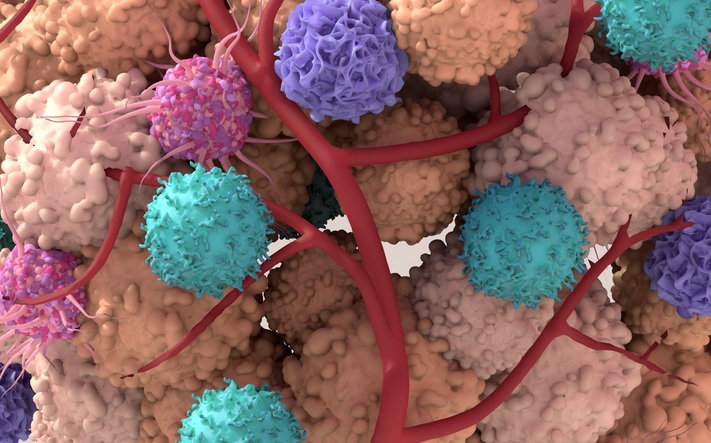
In a prospective cohort study using the prospective cohort incident-tumor biobank method (PCIBM), investigators analyzed tumor samples from 837 patients drawn from the long-running Nurses’ Health Study and the Health Professionals Follow-Up Study. The study linked vascular characteristics to patient outcomes and was published on September 21, 2026, in JAMA Network Open. By interrogating vessel density and morphology at scale, the analysis connected discrete vascular phenotypes with colorectal cancer–specific mortality.
Higher overall blood vessel density in tumors was associated with better survival, and a higher proportion of microvessels correlated with improved outcomes. In contrast, vessel subtypes associated with angiogenesis were linked to poorer prognosis. Morphology also tracked with risk: smaller, rounder vessels were associated with better outcomes, whereas larger, more abnormal vessels were tied to worse outcomes.
The research team noted that certain vessel features have also characterized early-onset colorectal cancer in prior work. Future studies will examine whether specific vascular features are linked to known or novel risk factors using the PCIBM approach, and the authors emphasize that additional validation is needed to clarify how vessel phenotypes influence outcomes.
“Numerous blood vessels extend deep into tumors, yet their role in tumor biology is still relatively understudied. We are finding that some tumor vessel subtypes may represent potential therapeutic targets. For example, immunotherapy combined with vessel-targeting therapy may prove even more effective in treating colorectal cancer than immunotherapy alone,” said Shuji Ogino, M.D., chief of the Program in Molecular Pathological Epidemiology in the Department of Pathology at Mass General Brigham.
“Our study demonstrated that vascular features could serve as prognostic biomarkers, biological or clinical signs that signal the likely path of a disease. It indicates what might have happened in the past or what may happen in the future, no matter what treatment is used, which may be useful for risk stratification and precision medicine,” added Ogino.
Related Links
Mass General Brigham