New qPCR Master Mixes Offer Broad Compatibility for Routine Research
Posted on 06 Nov 2026
Quantitative PCR (qPCR) workflows require consistent reagent performance across instruments and assay formats. Laboratories must also manage costs without changing established protocols. Two newly launched master mixes aim to meet these needs with a value-priced option for reliable, reproducible qPCR testing.
Thermo Fisher Scientific has introduced the Thermo Scientific AmpSure Universal SYBR Green and Probe qPCR Master Mixes for everyday applications. The two mixes give researchers a choice of detection chemistry according to their experimental needs. Within the family, AmpSure SYBR Green supports routine gene expression analysis, while AmpSure Probe supports multiplexing and a broader range of applications, including gene expression analysis, genotyping, and microbe detection.
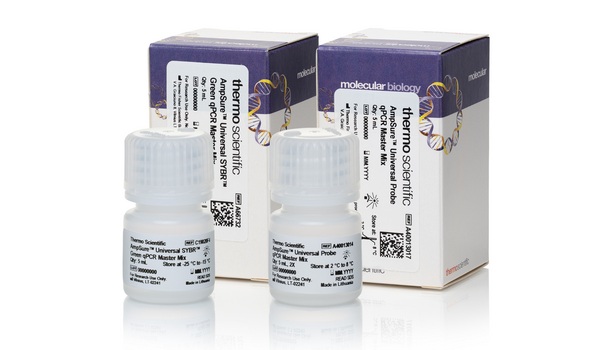
Both mixes are compatible with leading qPCR instruments, a wide range of reverse transcriptases, and primers and probes, allowing researchers to incorporate AmpSure into existing laboratory setups and established workflows. This broad compatibility is central to the family’s design, supporting use across systems and assays already in place rather than limiting researchers to specific instruments or workflows for which many master mixes are optimized.
Complementing this flexibility, the SYBR Green and Probe master mixes have the same price per reaction, allowing laboratories to choose the detection chemistry best suited to each experiment while keeping reagent costs manageable. Both mixes are for research use only and are not for use in diagnostic procedures. Pricing and availability are subject to change.
“Academic, government and small biotech researchers need master mixes they can rely on for everyday qPCR, with the flexibility to work across the instruments and assays already in their labs,” said Ferrier Le, Senior Manager, R&D, Thermo Fisher Scientific. “AmpSure combines reliable performance and value, helping labs make the most of their research budgets and keep research moving forward without changing their existing workflows.”