Stretchable Bioelectronic Implant Lowers Blood Pressure in Preclinical Study
Posted on 19 May 2026
Hypertension, or high blood pressure, drives major cardiovascular morbidity and affects nearly half of adults in the United States. About one in ten patients develop drug‑resistant hypertension that persists despite multidrug therapy, raising risks for stroke, heart failure, and kidney disease. Existing implantable neuromodulation options can be limited by rigid components that irritate soft tissues. To help address this challenge, researchers have now developed a soft, suture‑free bioelectronic implant designed to modulate arterial reflexes and reduce blood pressure.
Developed at Penn State (University Park, PA, USA), the 3D‑printed system—called CaroFlex—combines soft, stretchy substrates with a bioadhesive layer that allows the device to conform to and adhere to living tissue. Conductive hydrogels form the electrodes, while adhesive hydrogels provide strong, nontoxic fixation without sutures. The design is intended to match the mechanics of arteries and maintain stable electrical contact during physiological motion.
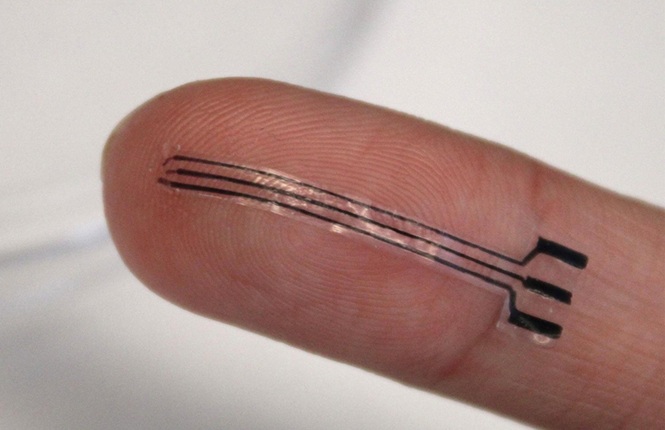
CaroFlex targets the carotid sinus, where baroreceptors sense arterial stretch and trigger the baroreceptor reflex that regulates blood pressure. By delivering electrical stimulation at specific frequencies to this region, the device modulates the reflex to lower pressure. Unlike commercially available systems built from rigid metals and plastics, which are typically secured with stitches that can damage tissue over time, the soft architecture aims to minimize local trauma and improve long‑term integration.
In laboratory testing, the device stretched to more than twice its original length before failure, indicating mechanical compliance with vascular tissues. The adhesive film maintained continuous, strong adhesion, including when formulations were stored for six months. Compared with conventional platinum electrodes, CaroFlex achieved closer tissue contact and a more reliable electrical interface.
The team evaluated the implant in rat models with sensors monitoring arterial pressure over a 10‑minute window. Of five tested stimulation frequencies, four lowered active blood pressure by more than 15% on average. At two weeks, tissues in contact with the implant appeared clean and showed no signs of damage or immune response, supporting biocompatibility in vivo.
The study was published in Device on May 5, 2026. The researchers plan to fine‑tune stimulation parameters and scale manufacturing, with the goal of advancing to human trials in hypertension. They report that the 3D‑printing approach could streamline customization and accelerate translation compared with traditional fabrication methods.
Related Links
Penn State