Study Uses Blood Samples to Identify Diseases Years Before They Start
Posted on 03 Mar 2026
Chronic diseases such as lupus, rheumatoid arthritis, Crohn’s disease, colon cancer, and heart failure often develop silently for years before symptoms appear. By the time they are diagnosed, significant and sometimes irreversible damage may already have occurred. Current medical tools largely detect disease after clinical signs emerge, limiting opportunities for early intervention. A new large-scale initiative aims to identify molecular warning signals years before diagnosis, with the aim of predicting and preventing disease before symptoms begin.
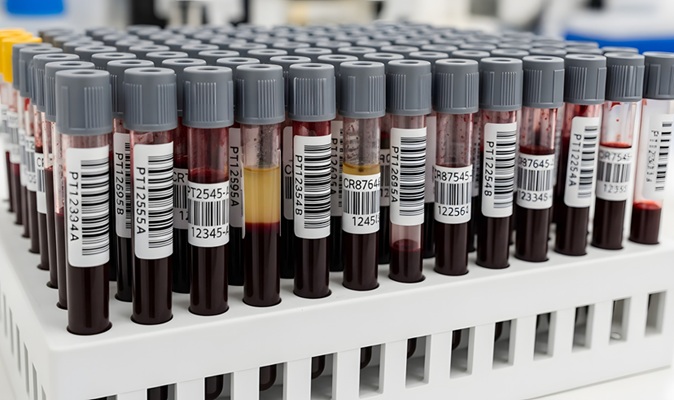
In the collaborative project, called ORIGIN: Omics to Characterize Preclinical Stages of Non-Infectious Diseases, led by the Icahn School of Medicine at Mount Sinai (New York, New York, USA), researchers will analyze stored blood samples from up to 13,000 active-duty U.S. service members using advanced “omics” technologies, including proteomics, metabolomics, genomics, and exposomics. The samples, drawn years before any diagnosis, come from the Department of Defense Serum Repository, which contains longitudinal specimens linked to comprehensive health records.
The initiative builds on more than a decade of research that previously identified molecular signals preceding the diagnosis of inflammatory bowel disease in military personnel. ORIGIN expands that model to more than 25 conditions, including autoimmune diseases, neurodegenerative disorders, PTSD, cancer, and heart failure.Using computational modeling and integrated molecular analysis, researchers will examine biological changes occurring several years before diagnosis. The study will also explore how environmental exposures, such as burn pits and per- and polyfluoroalkyl substances (PFAS), may alter disease risk. Samples collected between October 2003 and September 2025 will be analyzed over an anticipated 10-year study period.
By mapping the early molecular pathways shared across multiple conditions, the team aims to shift medicine from reactive treatment to proactive prevention. The multidisciplinary structure, coordinated through the Precision Immunology Institute at Mount Sinai, enables collaboration across cardiology, immunology, oncology, neurology, and data science. If successful, ORIGIN could reshape disease classification, inform clinical guidelines, guide drug development, and contribute to public health policy by identifying individuals at risk before clinical symptoms arise.
"ORIGIN is exactly the kind of bold, boundary-breaking science that PrIISM was built to support," said Miriam Merad, MD, Ph.D., Director, PrIISM, and Mount Sinai's Co-Principal Investigator for ORIGIN. "By uniting 10 departments and bridging the worlds of military medicine and academic research, we are creating something entirely new—a molecular atlas of how disease begins. The potential to prevent illness before it starts, and to rewrite how we classify and treat dozens of conditions, is truly transformative for patients everywhere."
Related Links:
Icahn School of Medicine at Mount Sinai