Skin Biopsy Offers New Diagnostic Method for Neurodegenerative Diseases
Posted on 29 Jan 2026
Transthyretin amyloidosis (ATTR) is a rare, progressive, and highly aggressive disease caused by the misfolding of a specific protein that accumulates as toxic amyloid filaments in multiple organs. The condition can affect the heart, nervous system, kidneys, and eyes, often leading to irreversible organ damage before a definitive diagnosis is made. Until now, detailed structural analysis of these deposits relied largely on post-mortem tissue, limiting early diagnosis and real-time disease tracking. A new approach now enables the three-dimensional structure of these abnormal protein deposits to be resolved from a minimally invasive skin biopsy in living patients.
Researchers from the University of Geneva (UNIGE, Geneva, Switzerland), in collaboration with Università della Svizzera Italiana (USI, Lugano, Switzerland), focused on transthyretin (TTR), a protein that misfolds and assembles into amyloid fibrils in ATTR, a mechanism shared with major neurodegenerative diseases. The team obtained a small skin biopsy from a living ATTR patient, a procedure that is quick and nearly painless.
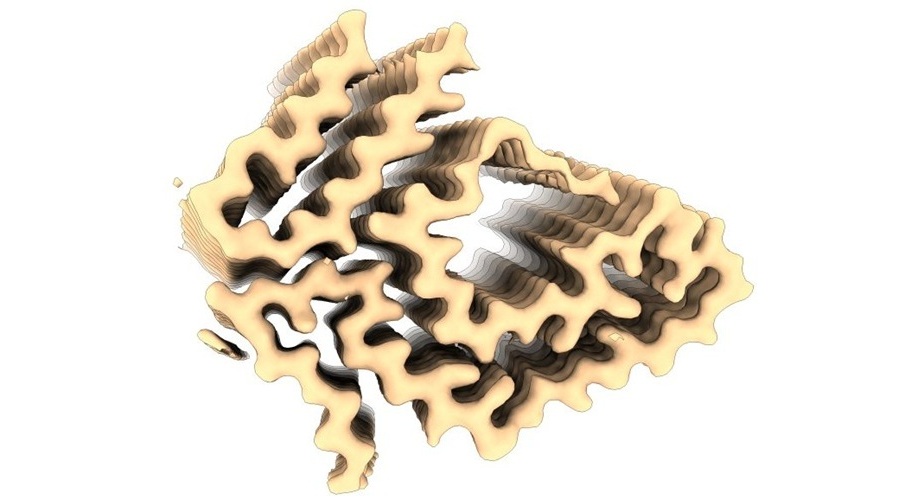
Despite the limited tissue, they isolated sufficient amyloid fibrils to determine molecular composition and resolve their 3D structure using cryo-electron microscopy, which visualizes proteins in their native state at near-atomic resolution. Structural analysis showed that fibrils extracted from skin tissue adopt an almost identical fold to amyloid deposits previously observed in less accessible organs, such as the heart or brain. This confirmed that skin-derived fibrils faithfully reflect systemic amyloid pathology.
The findings, published in Nature Communications, demonstrate that detailed structural insights can be obtained without relying on post-mortem samples. The study marks the first time amyloid fibril structures have been resolved directly from a skin biopsy of a living ATTR patient. Because the biopsy is minimally invasive, the method enables longitudinal monitoring of amyloid structures over time, across disease stages, and in response to therapy. This could significantly improve how disease progression and treatment efficacy are evaluated in ATTR.
Earlier and broader access to structural diagnosis may also help identify patients sooner, when interventions are more effective. Encouraged by these results, the researchers plan to apply the same approach to other amyloid-driven neurodegenerative disorders, including Alzheimer’s and Parkinson’s disease. Studying deposits directly in living patients could expand structural research beyond post-mortem samples and support more personalized therapeutic strategies.
“Being able to study the structure of deposits directly in living patients profoundly changes our ability to understand these diseases and assess the effect of treatments,” said Professor Andreas Boland, the study's senior author. “It greatly expands the number of structural studies previously reserved for post-mortem samples, and thus potentially enables personalized care in the future.”



.jpg)