Simple Immunohistochemical Size Ratio Improves Classification of Primary Aldosteronism
Posted on 20 Aug 2026
Primary aldosteronism is a common but underdiagnosed cause of hypertension, in which excess aldosterone promotes salt retention and raises blood pressure. Identifying the dominant source of hormone overproduction can be difficult because multiple aldosterone-producing nodules may coexist within the adrenal gland. After adrenalectomy, histopathologic confirmation typically relies on CYP11B2 immunohistochemistry, but interpretation can vary. New findings show that a simple nodule size ratio derived from CYP11B2 staining can improve classification and has already been incorporated into routine diagnostics.
Karolinska Institutet and Karolinska University Hospital have implemented a quantitative immunohistochemical metric, the B2 ratio, to stratify primary aldosteronism in surgical specimens. The B2 ratio compares the two largest CYP11B2-positive nodules identified by immunostaining for the aldosterone-synthesizing enzyme. By focusing on relative nodule size, the method helps determine whether a single dominant lesion is driving disease or whether aldosterone production is more diffusely distributed.
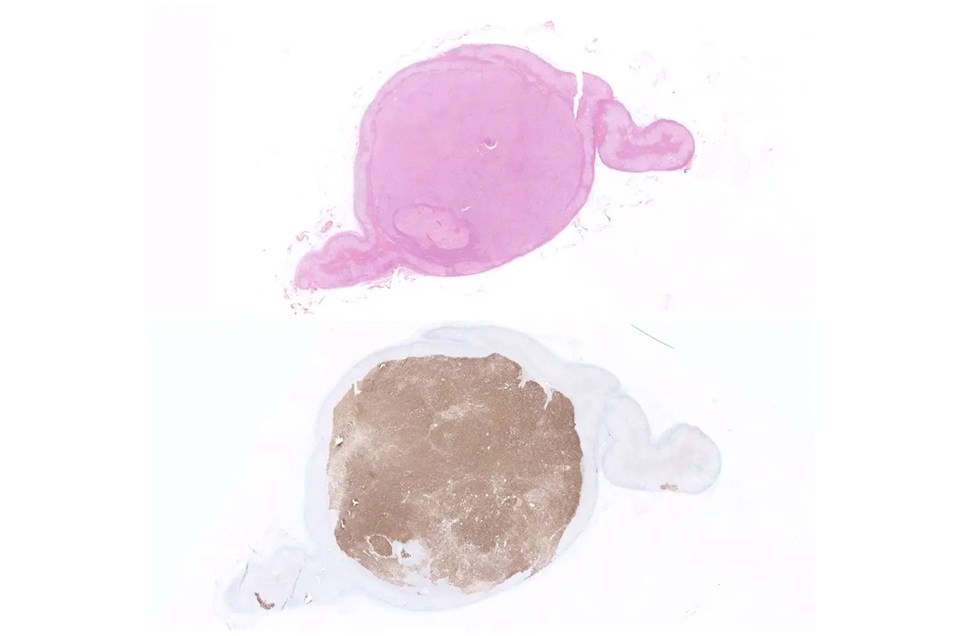
Following adrenalectomy, adrenal tissue is stained with an antibody against CYP11B2 to localize aldosterone-producing cells and nodules. Because several CYP11B2-positive nodules may appear in one gland, traditional readouts can be difficult to interpret consistently. The B2 ratio provides a standardized, quantitative read that aids disease classification and is associated with patient outcomes after surgery.
The approach is supported by two studies from the same research group. One study was published in the European Journal of Endocrinology in 2025 and examined nodule size metrics alongside established histopathologic tools. A second study, published in Histopathology on August 4, 2026, reported the first evaluation of the CYP11B2 size ratio in clinical routine and described its uptake in everyday diagnostics at Karolinska University Hospital. Together, the studies show how a straightforward quantitative method can be translated from research into patient care.
“In two recent studies, our group has addressed this challenge using the B2 ratio, a simple measurement comparing the two largest CYP11B2-positive nodules. We show that this approach can improve disease classification and is associated with patient outcomes after surgery. I love it when our research can turn an idea into reality and improve care for our patients—not 10 years from now, but tomorrow,” said Christofer Juhlin, professor at the Department of Oncology-Pathology and last author of the two studies.
Related Links
Karolinska Institutet
Karolinska University Hospital