Saliva-Based Test Detects Biochemical Signs of Sleep Loss
Posted on 04 Jun 2026
Acute sleep loss impairs cognition and motor skills, raising safety risks that resemble alcohol intoxication. Clinicians currently lack an objective biochemical test to determine when someone is dangerously sleep deprived, complicating triage and enforcement in high-risk settings. Drowsy driving alone contributes to tens of thousands of crashes annually in the United States, underscoring the need for rapid, noninvasive assessment tools. A new study shows that specific patterns of saliva metabolites can distinguish well-rested from sleep-deprived individuals.
Researchers at the University of Zurich developed a saliva-based metabolomic approach that profiles oral fluid to create a “sleepiness fingerprint.” The team analyzed metabolite compositions in samples collected before and after controlled sleep conditions, then trained a predictive model to classify acute sleep loss. Noninvasive by design, the strategy is framed for use in contexts ranging from roadside checks to clinical environments.
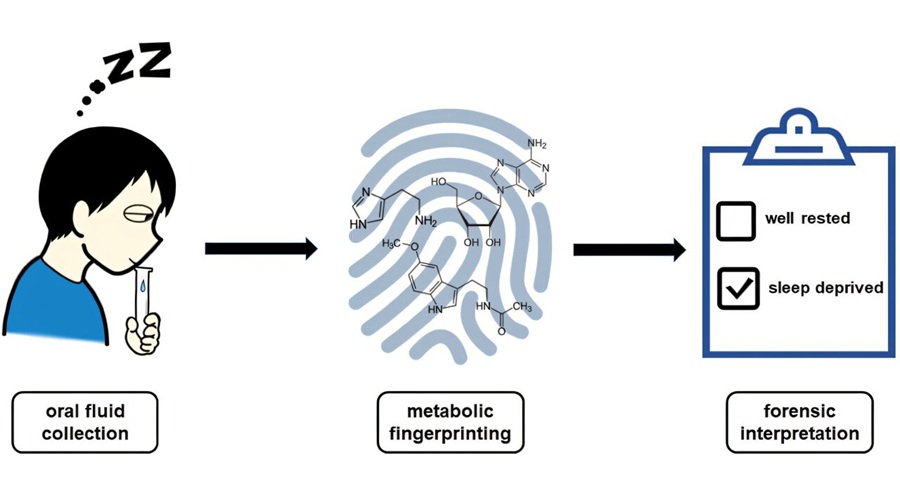
Researchers enrolled 20 healthy young adult males who typically slept seven to nine hours nightly. Each participant completed three scenarios in randomized order one week apart: one night without sleep (deprivation), four nights restricted by two hours below usual sleep (restriction), and approximately eight hours per night (well rested). Saliva was collected before and after each scenario for metabolomic analysis.
Statistical analyses identified 10 molecular differences between the well-rested and sleep-deprived states, whereas the restricted-sleep state did not differ significantly from rested. A predictive model built from the varying salivary metabolites correctly identified samples from sleep-deprived individuals 94% of the time. Some errors were likely related to individual metabolic processes; notably, after 24 hours awake, a subset of participants did not return to a fully rested metabolic profile after eight hours of sleep.
The findings, published in the American Chemical Society's Journal of Proteome Research on May 6, 2026, support a metabolite-based “sleepiness fingerprint” alongside a predictive model that discriminates acute deprivation. The team is initiating a large-scale international assessment, expanding tests to more than 1,000 samples drawn from shift workers, women, and frequent drivers.
“Until now, sleep deprivation has been impossible to measure biochemically—and yet it is one of the greatest burdens of our time. This study introduces the first direct biomarkers of sleep loss in saliva under real-world conditions, marking a milestone in forensic investigations,” said Thomas Kraemer, corresponding author of the study.
Related Links
University of Zurich
American Chemical Society