Rapid D-Dimer Assay Supports Exclusion and Monitoring of Serious Clotting Conditions
Posted on 01 Oct 2026
Blood clots can rapidly become life‑threatening and affect approximately 10 million people worldwide each year. During time‑sensitive evaluations, clinicians use D‑dimer testing to help rule out deep vein thrombosis and pulmonary embolism and determine next steps in care. A newly launched test now provides rapid D‑dimer assessment to support confident exclusion decisions.
Siemens Healthineers has introduced the Innovance D‑Dimer 2.0 assay, a globally launched blood test that is CE‑marked and cleared by the U.S. Food and Drug Administration (FDA) through 510(k). The assay helps clinicians assess patients with suspected venous thromboembolism (VTE), including deep vein thrombosis (DVT) and pulmonary embolism (PE). It is intended for DVT and PE exclusion in conjunction with a clinical pretest probability (PTP) assessment model in outpatients suspected of these conditions.
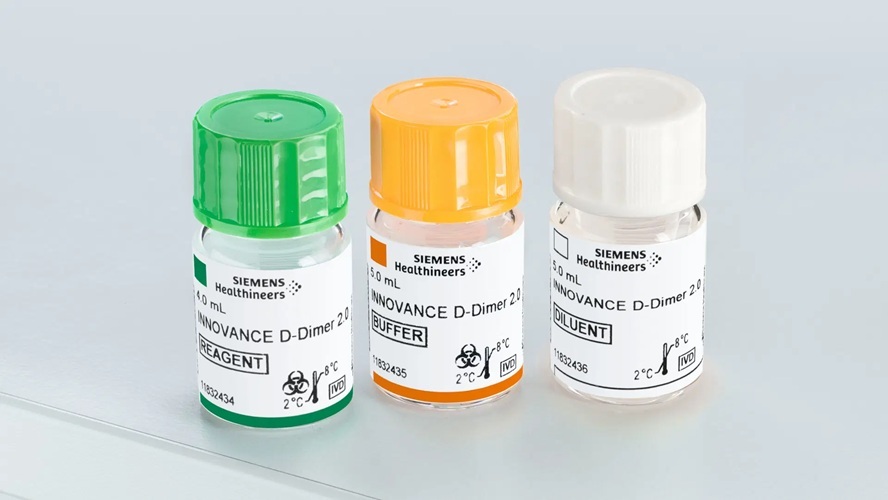
Beyond VTE exclusion, the assay is used to aid in the diagnosis and monitoring of hypercoagulable conditions, including disseminated intravascular coagulation (DIC), a serious complication that may occur in patients with, for example, sepsis, malignancy, or toxic snake bites. The test’s role is underscored by the need for rapid intervention when clots obstruct blood flow or embolize to the heart, lungs, or brain, preventing oxygen delivery to vital organs. The design supports use in time‑sensitive, potentially life‑threatening scenarios.
Operational features target high‑throughput laboratories managing urgent orders and staffing constraints. Ready‑to‑use reagents and controls and a short time to results are intended to help streamline emergency department triage and enable timely treatment decisions. The assay’s analytical robustness and high specificity are described as supporting safe rule‑out and potentially reducing unnecessary imaging and follow‑up procedures.
Innovance D‑Dimer 2.0 is part of a broader coagulation portfolio and is available for a variety of hemostasis systems, including the CN‑3000/CN‑6000 platforms. The assay is available across many markets, with expanded availability expected in October, and product availability varies by country.
“Minutes matter when clinicians are evaluating a patient for a serious blood clot. Our new D-dimer assay is designed to help laboratories deliver timely, high-quality results that underpin quicker, confident clinical decisions,” said Martin Fuhrer, head of Specialty Laboratory Solutions for Diagnostics, Siemens Healthineers.