Rapid Breath Sensor Detects SARS-CoV-2 from Exhaled Air
Posted on 18 Aug 2026
Nasal swabs and polymerase chain reaction (PCR) testing have been central to identifying SARS-CoV-2, but they can be uncomfortable, slow, and logistically complex when samples require transport. Point-of-care alternatives that provide immediate results without sample handling could streamline infection control, particularly when patients are most contagious. Noninvasive breath-based testing could further reduce barriers to frequent screening.
Engineers at Northeastern University have developed a handheld gas-sensing device that captures viral particles in a person’s breath and produces near-instant readouts, similar to a Breathalyzer. The platform uses a molecularly imprinted polymer (MIP), a synthetic material molded around a target molecule to form microscopic cavities that selectively capture specific viral particles, including the SARS-CoV-2 spike protein. The sensor combines a silicon base with a graphene layer; when viral particles bind to the MIP cavities, the device’s electrical resistance changes, generating a detectable signal.
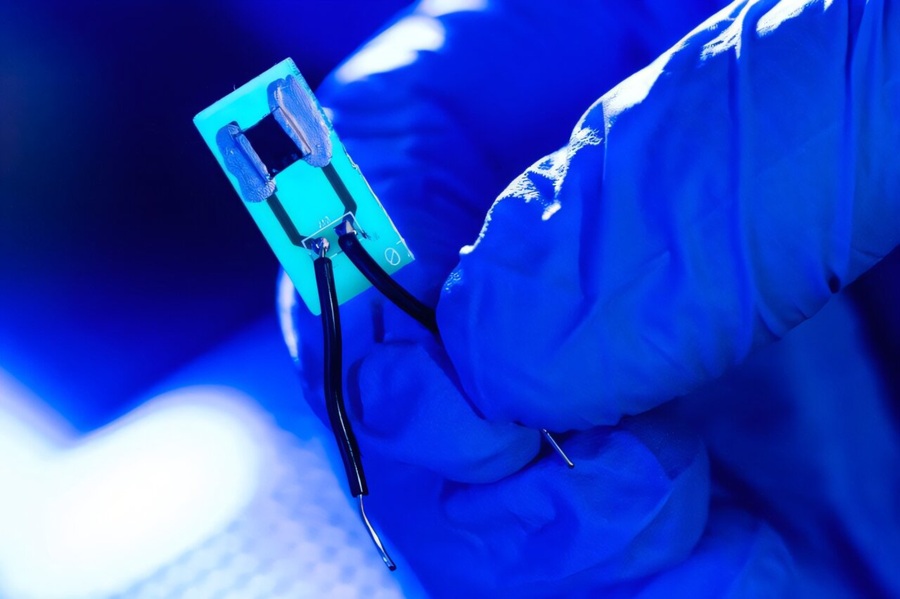
The team refined the technology through multiple generations to improve sensitivity and selectivity, enabling the sensor to recognize its target biomarker while largely ignoring other volatile organic compounds in exhaled breath. The device performs best early in infection, when individuals are actively shedding virus, with performance declining as contagiousness decreases. The SARS-CoV-2 application has received a U.S. Patent and Trademark Office patent and has demonstrated high sensitivity and accuracy, although the researchers note that further testing is needed before the technology can be used for clinical diagnosis.
Because the MIP layer can be re-engineered to fit different targets, the same sensing strategy is being adapted for additional analytes. The group mentions ongoing work on sensors for disease-associated particles such as glucose for diabetes and certain RNA molecules relevant to cancer detection, as well as for substances including fentanyl. Larger-scale testing is cited as a next step before any move toward commercialization.
“It's even faster than a swab test and much more user-friendly,” said Nian Sun, distinguished professor of electrical and computer engineering at Northeastern University.
“The beauty of our sensor is that we can readily change our sensors for newly appearing or newly emerging pathogens,” added Sun.
Related Links
Northeastern University