Pooled Saliva PCR Screening Identifies Congenital CMV Missed by Targeted Testing
Posted on 01 Oct 2026
Congenital cytomegalovirus (cCMV) can be present in newborns who appear healthy and pass routine hearing screening. The infection is one of the most common maternal-to-fetal infections during pregnancy and may affect hearing or development later in childhood. Because most affected infants show no clear signs at birth, targeted testing can miss children who need monitoring. New findings demonstrate that universal newborn screening may identify many otherwise undetected cCMV cases.
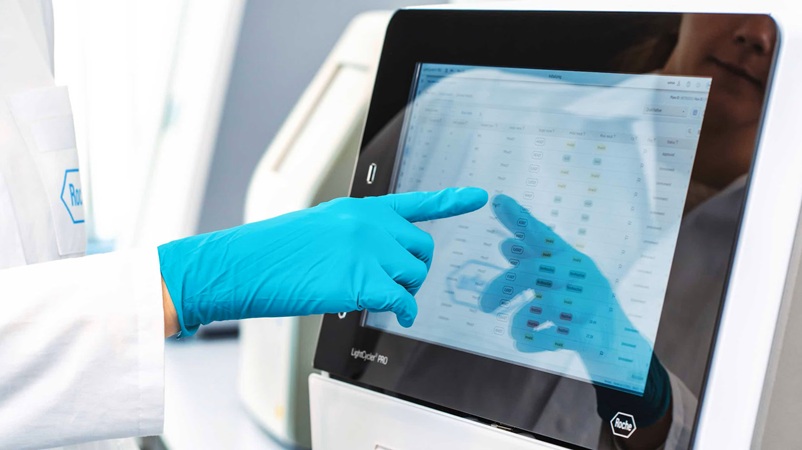
Hadassah Medical Center investigators evaluated a pooled saliva-testing system for newborn cCMV screening. The method combines saliva samples from several babies and tests them together using PCR. If a pooled sample is positive, infants undergo further testing, with positive saliva results confirmed through urine testing. The approach reduced the number of laboratory tests required by 83% compared with individual testing, while maintaining high detection sensitivity.
The prospective population-based cohort study screened 48,556 newborns, representing nearly 95% of babies born at Hadassah Medical Center’s two hospitals in Jerusalem between April 2022 and March 2025. Investigators identified 176 infants with congenital CMV, equal to about 3.6 cases per 1,000 babies screened. Under a targeted approach based on failed hearing tests, signs of cCMV illness, or known maternal infection, 100 of the 176 affected infants, or 57%, would not have qualified for testing.
Among the 100 infants who would have been missed without universal screening, eight were later found to have moderate to severe signs of cCMV. Three had hearing loss despite appearing otherwise asymptomatic, and 11 ultimately received antiviral treatment. Some infants identified only through universal screening had sensorineural hearing loss despite passing the routine newborn hearing test. At one year, a small proportion had permanent hearing or balance-related problems, while infants who were completely asymptomatic after initial evaluation had normal hearing and development when follow-up data were available.
The study also found that cCMV was not limited to primary maternal infections. Among 158 cases with known maternal infection history, 53% followed a non-primary infection and 47% followed a primary infection, with similar rates of significant symptoms, hearing loss, and one-year complications in both groups. The work was published in The Lancet Infectious Diseases and involved Hadassah Medical Center and the Hebrew University of Jerusalem. The investigators stated that the findings support universal newborn CMV screening, while noting that broader implementation should consider unresolved questions, including uncertain findings and overall cost-benefit.
Related Links
Hebrew University of Jerusalem