POC Breath Diagnostic System to Detect Pneumonia-Causing Pathogens
Posted on 23 Dec 2025
Pseudomonas aeruginosa is a major cause of hospital-acquired and ventilator-associated pneumonia, particularly in lung transplant recipients and patients with structural lung disease. Its ability to form biofilms and resist antibiotics makes infections difficult to treat and often leads to unnecessary use of broad-spectrum antibiotics. Current diagnostic tools are slow, invasive, or unreliable and frequently fail to distinguish between harmless colonization and invasive infection. Now, a non-invasive breath-based diagnostic approach could address these challenges by identifying pneumonia-causing pathogens quickly and accurately.
Detect-ION (Tampa, FL, USA) has undertaken a collaborative project with Mayo Clinic Florida (Jacksonville, FL, USA) to develop a diagnostic tool capable of detecting lower respiratory tract pathogens such as P. aeruginosa. The effort focuses on overcoming limitations of sputum cultures, blood tests, and bronchoscopy, particularly in high-risk or immunocompromised patients.
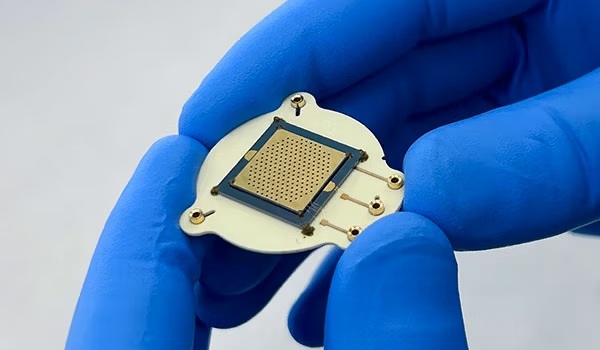
The system is built on Detect-ION’s CLARION platform, a point-of-care breath diagnostic technology that combines a miniaturized gas chromatograph with a chip-scale mass spectrometer. Originally designed for trace chemical sensing, the platform has been adapted to identify disease-specific volatile organic compounds in exhaled breath. CLARION is capable of delivering lab-grade analysis in under five minutes, detecting trace biomarkers with high sensitivity and specificity.
By analyzing volatile organic compounds associated with P. aeruginosa, the system aims to identify active lower respiratory infections from a simple breath sample. While clinical validation is ongoing, the approach is intended to provide faster and more actionable results than conventional diagnostic methods.
In addition to detecting lower respiratory tract pathogens, the breath test aims to distinguish invasive infection from colonization, correlate biomarkers with disease severity, and monitor treatment response in real time. This could significantly reduce reliance on invasive procedures such as bronchoscopy and support more judicious use of systemic antibiotics.
In the long term, the developers envision CLARION as a scalable platform with applications across pulmonary infections, malaria, tuberculosis, lung cancer, and broader use in public health, military, and industrial settings. Further studies will focus on clinical validation and expanding the range of detectable respiratory diseases.
"For decades, the gold standard of chemical analysis has been limited to laboratory settings," said Dr. Ashish Chaudhary, CEO of Detect-ION. "With CLARION, we've miniaturized this capability and adapted for point-of-care breath analysis that now detects diseases in minutes. This collaboration allows us to apply this technology to one of medicine's biggest challenges: diagnosing pneumonia quickly and accurately. This is not just an incremental step—it's a paradigm shift in how we think about diagnostics, with the potential to reduce costs, prevent drug resistance, and redefine standards of care worldwide."
Related Link
Detect-ION
Mayo Clinic