Physical Activity and Thrombophilic Risk Investigated
By LabMedica International staff writers
Posted on 18 Feb 2020
Among the effects of physical exercise on coagulation, the influence on protein anticoagulant system and PC deficiency-related thrombophilic risk are still controversial. The impact of physical activity on the coagulation system has been described.Posted on 18 Feb 2020
Physical activity (PA) determines a shortening of the activated partial thromboplastin time (APTT) and an increase of the factor VIII. On the other hand, little is known about the variations of the anticoagulant determinants and specifically of Protein C (PC) system, during PA, and in the subsequent recovery phase.
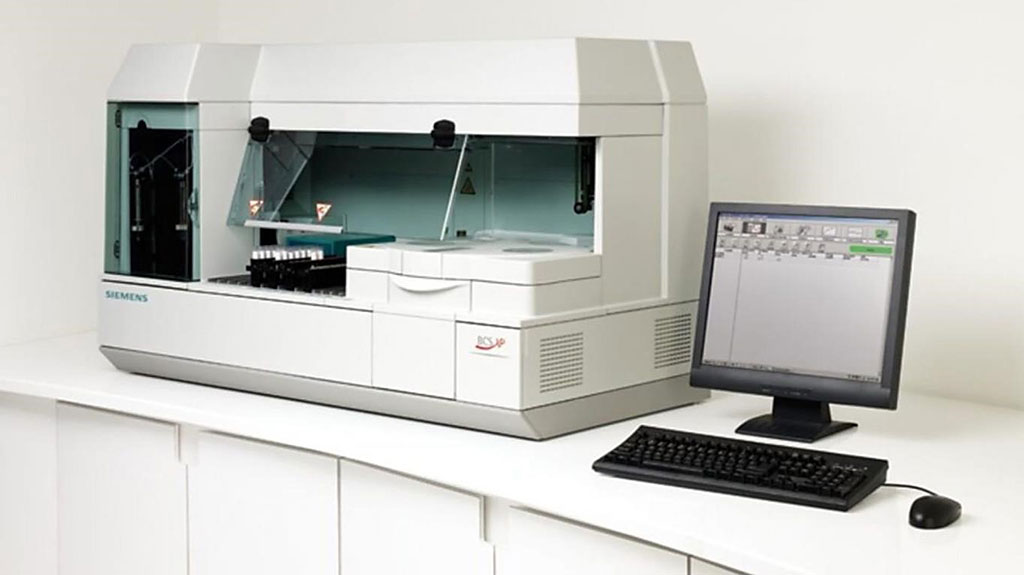
Image: The BCS XP System is one of the most widely used fully automated hemostasis analyzers, delivers accurate and precise results (Photo courtesy of Siemens Healthcare).
Hematologists at the Ospedale Fatebenefratelli (Naples, Italy) and their colleagues analyzed the variations of the PC system in healthy subjects (12 males, age 18–43 years; mean: 28.5 ± 5.30) performing a treadmill procedure. They measured the APTT before and after activation of endogenous PC, in these subjects before and after a physical exercise and during the subsequent recovery phase (up to one hour). Protein C activity-dependent clotting time (PCAT) was measured on all blood samples by ProC Global test (Siemens Healthcare, Malvern, PA, USA). APTT was also assayed using Siemens Healthcare Pathromtin SL, with a BCS instrument.
The team reported that for the 20 participants in the study, APTT values decreased slightly, i.e., from a basal value of 37.5 seconds (35.0–42.0) to 34.0 seconds (31.0–39.3) and to 35.5 seconds (32.3–38.0) at 15 and at 30 minutes post-exercise respectively. On the other hand, the Pro C values progressively dropped from a median basal level of 123 seconds (114.7–152.3) to 84.5 seconds (78.3–91.0) at 30 minutes post-exercise and returned to baseline levels at 60 minutes.
The authors concluded that the their study shows that the coagulation unbalance observed after strenuous exercise and with no consequence in healthy individuals with normal PC level, could increase the thrombophilic risk in silent carriers of significant defects of the protein C system and occasionally trigger an episode of deep vein thrombosis. The study was published on January 30, 2020 in the Journal of Blood Medicine.
Related Links:
Ospedale Fatebenefratelli
Siemens Healthcare




Platinum Member

Automated Coagulation Analyzer
Hemolumi H6

Gold Member

Flocked Fiber Swabs
Puritan® Patented HydraFlock®
New

Automated Immunoassay Analyzer
SuperFlex™
New
Gold Member

Serum Indices Control
Acusera Serum Indices Control