Multimodal AI Supports Prostate Cancer Risk Assessment Across Diverse Cohorts
Posted on 29 Sep 2026
Artera’s (Los Altos, CA, USA) multimodal artificial intelligence (MMAI) platform is being featured in five abstracts at the American Society for Radiation Oncology (ASTRO) 2026 Annual Meeting. The studies assess its use across prostate cancer populations in Australia, India, Africa, and the U.S., focusing on treatment decisions, metastatic risk, and consistency across patient groups.
One study from the prospective ASTuTE trial evaluated how MMAI affected decisions about short-term androgen deprivation therapy (ADT) in 786 men with intermediate-risk prostate cancer. After MMAI results were incorporated into shared decision-making, use of the biomarker produced a 20.7% net reduction in ADT recommendations, with follow-up ongoing to assess clinical outcomes.
Another study evaluated MMAI in 173 patients with high- or very high-risk localized prostate cancer from the Phase III POP-RT trial in India. Among patients classified as MMAI high risk, whole-pelvis radiotherapy reduced five-year distant metastasis to 2%, compared with 17% for prostate-only radiotherapy, suggesting the biomarker may help identify patients who benefit from broader radiation treatment.
Additional research compared more than 20,000 commercial MMAI biopsy test results with outcomes from nearly 20,000 patients in the multinational STAR-CAP cohort. Predicted 10-year risks of distant metastasis and prostate cancer-specific mortality were generally similar to observed outcomes across established clinical risk groups, supporting the model’s performance outside its original validation studies.
In another study, transcriptomic analysis of 90 native African, African American, and European American patients showed that higher MMAI scores were associated with similar gene expression patterns linked to more aggressive prostate cancer. These included pathways involved in tumor growth and metastasis, suggesting that the biomarker captures related biological signals across diverse populations.
Separate data from NRG/RTOG post-radical prostatectomy Phase III trials showed that MMAI’s prognostic accuracy remained consistent across racial and age groups. Investigators reported no evidence that either factor introduced bias into its risk assessments, adding to findings supporting the platform’s performance across different patient populations.
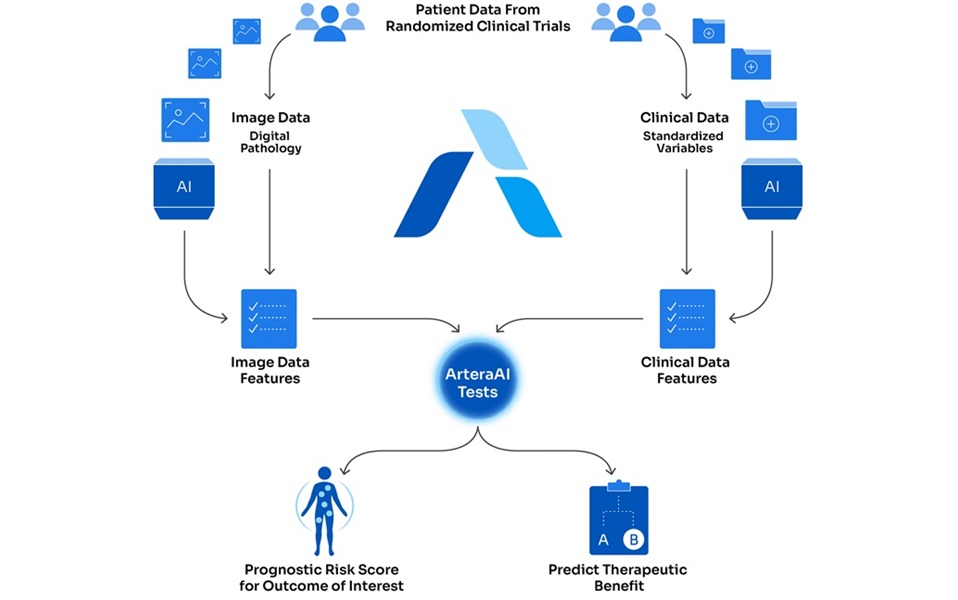
Artera’s MMAI approach combines digitized histopathology images with clinical data to assess cancer aggressiveness and predict treatment benefit. The platform has been validated in multiple Phase III randomized trials and is available in several versions. Artera has also received U.S. FDA authorization for ArteraAI Prostate and clearance for ArteraAI Breast.
“We believe the future of cancer care is one where the patient’s unique biology and risk increasingly inform personalized treatment decisions,” said Andre Esteva, CEO and Co-founder of Artera. “These findings demonstrate the potential of Artera's platform to deliver on this vision by providing consistent, data-backed insights across diverse populations, helping clinicians better tackle some longstanding questions in medicine today."
Related Links
Artera