AI Tool Predicts Chemotherapy Response from Biopsy Slides
Posted on 09 Mar 2026
Selecting first-line chemotherapy for advanced pancreatic cancer typically involves trying one of two approved regimens and switching if response is inadequate. An initial mismatch can delay disease control and further weaken patients. Predictive biomarkers that help guide therapy in other cancers are not yet available for pancreatic cancer. Researchers now report an artificial intelligence (AI) approach designed to individualize regimen selection before treatment begins.
The Computational Histology Artificial Intelligence (CHAI) platform was co-developed by investigators from Cedars-Sinai Health Sciences University (Los Angeles, CA, USA). CHAI analyzes digitized images of stained biopsy slides to capture cellular and tissue architecture routinely obtained during diagnostic workups. The system extracts and evaluates more than 30,000 histologic features from each case. It then generates a treatment preference tailored to an individual patient.
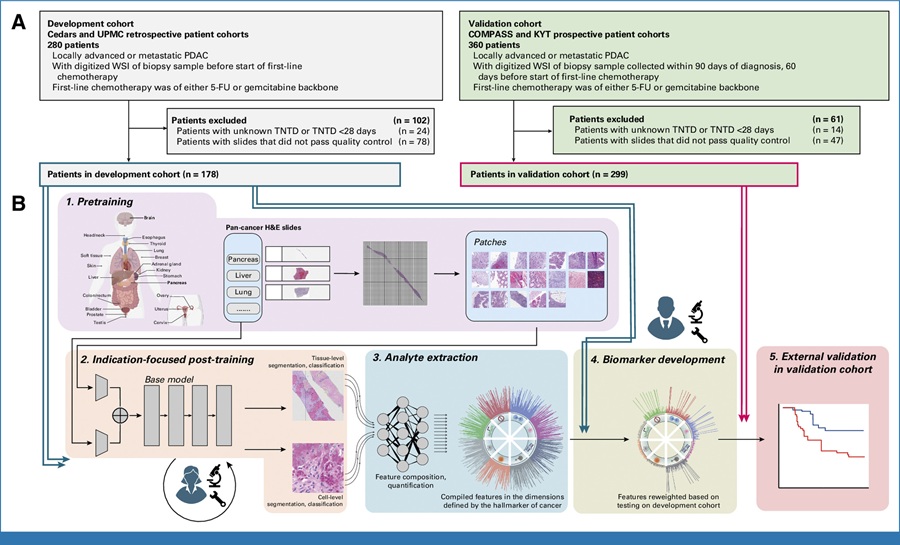
Investigators built the predictive model by assessing tumor tissue characteristics from 25,000 pancreatic cancer cases treated with one of the two standard chemotherapy options. They matched those image-derived features to observed treatment responses to train the algorithm. In subsequent testing on data from a large clinical trial that used the same two regimens, the tool accurately predicted how each patient responded to the therapy they received. The approach does not require additional sampling beyond the original biopsy.
According to the team, the platform could be validated prospectively in patients receiving therapy before being considered for routine clinical use. The authors note that the same method could be adapted to other solid tumor types and could compare different treatment modalities, including radiation therapy versus surgery. Findings were published on February 11, 2026 in the Journal of Clinical Oncology.
“Unlike most biomarker tests, where you need an extra sample of tissue or blood, this test requires only a scanned image of the patient's existing biopsy slide,” said Andrew Hendifar, MD, medical director of Pancreatic Cancer at Cedars-Sinai Cancer and first author of the study. “You just send the image electronically and quickly receive a result with the treatment preference. And you don't just learn which treatment is preferred. You learn how much more effective it is likely to be.”
Related Links
Cedars-Sinai Health Sciences University