Single Sample Classifier Predicts Cancer-Associated Fibroblast Subtypes in Patient Samples
Posted on 21 Feb 2026
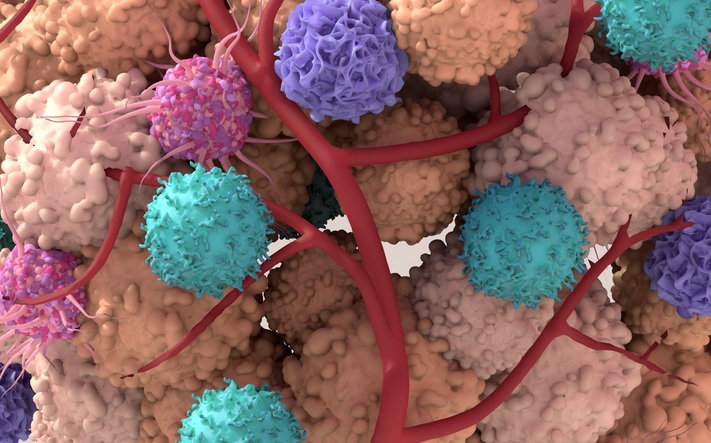
Pancreatic ductal adenocarcinoma (PDAC) remains one of the deadliest cancers, in part because of its dense tumor microenvironment that influences how tumors grow and respond to treatment. Cancer-associated fibroblasts (CAFs), key components of this environment, can either suppress or promote tumor progression, complicating therapeutic decisions. Researchers have now defined clinically relevant CAF subtypes and developed a classifier capable of predicting patient prognosis and response to immunotherapy.
A multidisciplinary team at UNC Lineberger Comprehensive Cancer Center (Chapel Hill, NC, USA) integrated expertise from multiple labs to characterize CAF subtypes and create a single-sample classifier known as DeCAF. Using single-cell RNA sequencing, bulk RNA sequencing, spatial transcriptomics, pathology and clinical datasets, the researchers identified gene pairs that distinguish tumor-promoting fibroblasts (proCAF) from tumor-restraining fibroblasts (restCAF). The DeCAF tool was designed to remain stable across different sequencing platforms and applicable to individual patient samples.
In their study published in Cell Reports Medicine, the researchers found that proCAF-dominant environments were associated with aggressive basal-like tumor cells and immunosuppressive landscapes. In contrast, tumors dominated by restCAF subtypes correlated with improved survival and greater sensitivity to immune checkpoint inhibition. The DeCAF classifier accurately stratified patients based on stromal profiles and demonstrated prognostic and predictive value not only in PDAC but also across other cancer types. Unlike traditional clustering approaches, DeCAF provided consistent results using single samples, enhancing its clinical applicability.
By offering a biologically grounded method to assess tumor microenvironment heterogeneity, the framework may help clinicians select targeted therapies tailored to each patient’s stromal composition. This approach could be particularly valuable in cancers such as PDAC, where immunotherapy has shown limited overall success. The researchers aim to further translate this classification system into clinical decision-making tools to optimize personalized treatment strategies.
“This innovative classifier creates new possibilities to guide treatment for PDAC and other cancers that see limited success with immunotherapy,” said Laura Peng, PhD, lead author of the study. “As far as translational impact, we hope to leverage better definition of tumor heterogeneity to improve treatment for our patients.”
Related Links:
UNC Lineberger Comprehensive Cancer Center