AI Tool Rapidly Analyzes Complex Cancer Images for Personalized Treatment
Posted on 05 Dec 2025
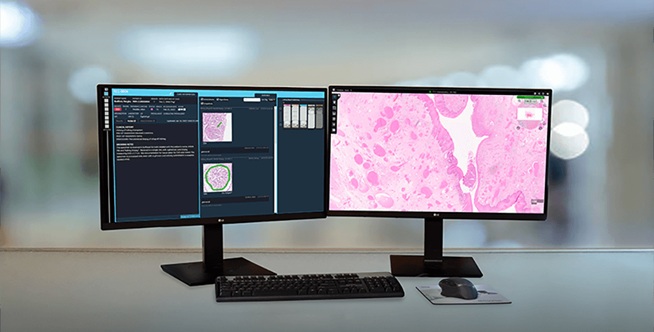
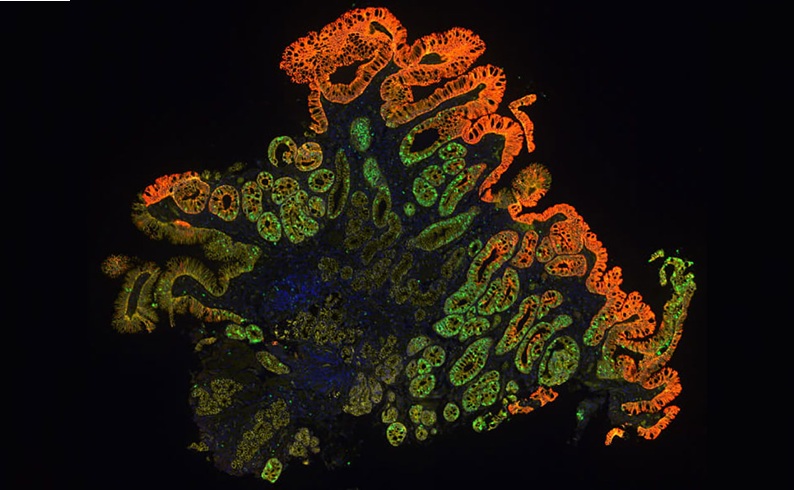
Complex digital biopsy images that typically take an expert pathologist up to 20 minutes to assess can now be analyzed in about one minute using a new artificial intelligence (AI) tool. The technology can detect cancer, identify where tumor lesions are located, and estimate the proportions of regions with varying aggressiveness. It offers a faster, more informative way to interpret tissue samples and could support more personalized treatment decisions.
The AI model, developed by researchers at the University of Cambridge (Cambridge, England, UK), was trained only on slides labeled with basic diagnostic information rather than detailed annotations. Using Superpatch-based Measurable Multiple Instance Learning, the system analyzes whole-slide images to map cancer subtypes and grade distributions, even though it was trained without region-level guidance. By capturing the heterogeneous composition of tumors, the algorithm mimics how clinicians interpret complex tissue structures.
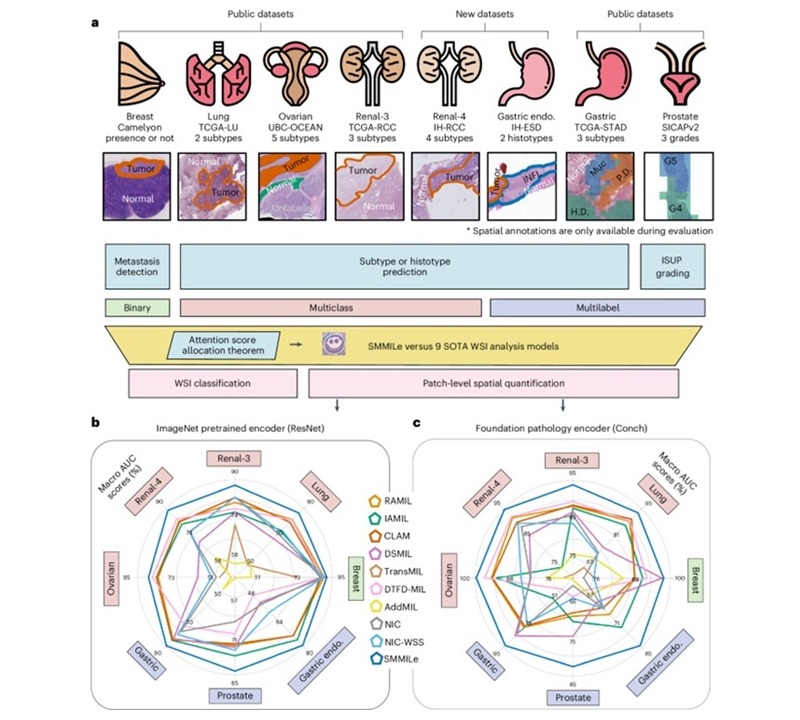
To evaluate performance, the team tested the model on eight datasets containing 3,850 whole-slide images representing lung, kidney, ovarian, breast, stomach, and prostate cancers. The study, published in Nature Cancer, showed that the tool delivered slide-level classification accuracy comparable to or better than nine leading AI systems. It also dramatically outperformed them in estimating tumor subtype proportions and spatial distribution across tissues.
These findings suggest that the tool could streamline diagnostic workflows and expand access to advanced cancer profiling. Because it trains on inexpensive, widely available datasets, it may help overcome cost barriers associated with spatial tumor mapping. The team now plans to apply the system to predict molecular biomarkers, providing deeper insights into tumor biology and enabling more tailored treatment strategies.
“By allowing pathologists to make faster, more accurate diagnoses, we can make sure patients receive the best treatment even sooner, improving our chances of successfully treating their cancer,” said Dr. Zeyu Gao, Early Cancer Institute, University of Cambridge, developer of the algorithm.
Related Links:
University of Cambridge